
Contents
Overview
B.B. King, born Riley B. King in 1925, wasn't just a blues musician; he was a cultural force whose soulful guitar playing and commanding stage presence defined the genre for generations. From his early days as a radio DJ and performer in Memphis to becoming a global ambassador for the blues, King's career spanned over six decades, leaving an indelible mark on music.
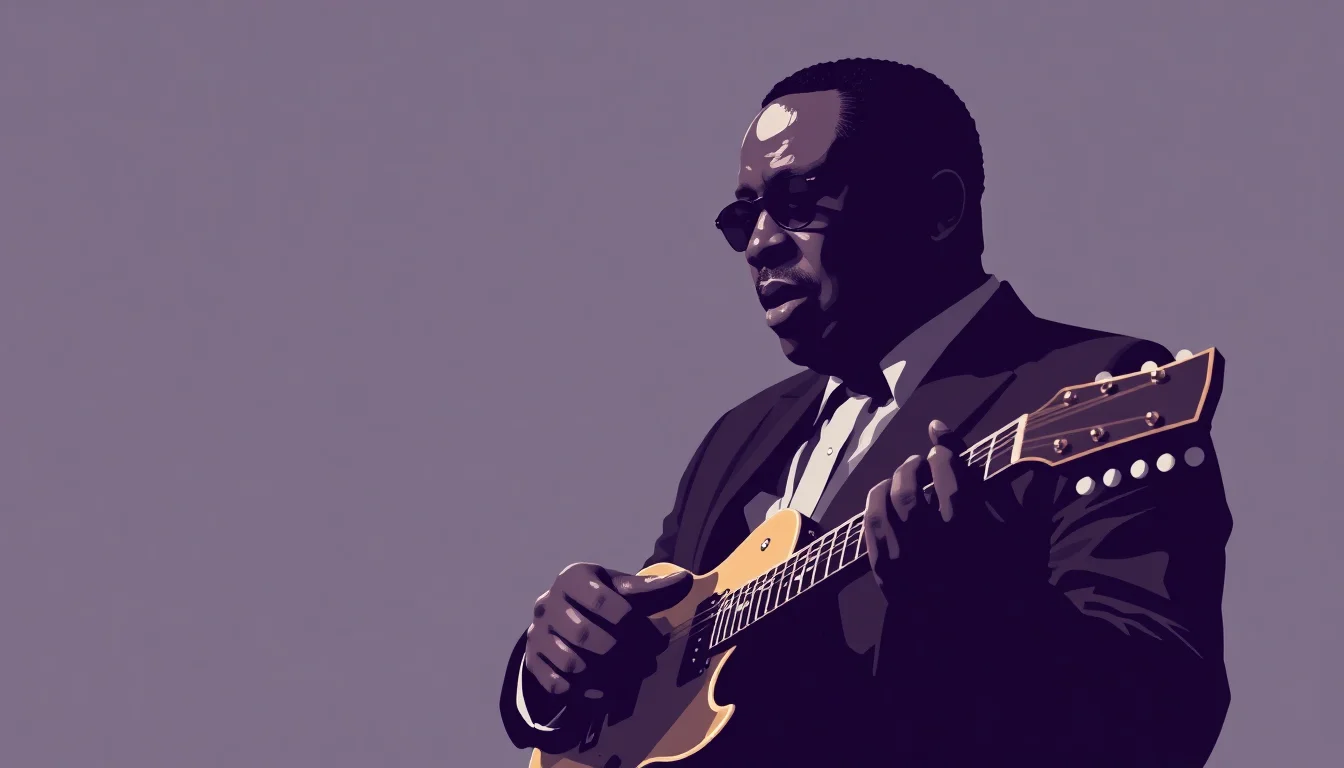
His signature style, characterized by fluid string bending, vibrato, and a sparse, economical approach to melody, was instantly recognizable. King's guitar, affectionately named 'Lucille,' became as famous as the man himself, a symbol of his enduring artistry. He masterfully blended elements of gospel, jazz, and R&B into his blues, creating a sound that was both deeply traditional and remarkably modern.
Early Life & Influences
Born Riley B. King on a cotton plantation in Mississippi, his early life was steeped in the hardship and spirituality that would later fuel his music. He first encountered the guitar through the church, and his early influences included gospel singers and the burgeoning blues artists he heard on the radio. After serving in the army, King moved to Memphis in 1948, where he began his radio career at WDIA, the city's first black radio station. This platform not only allowed him to play music but also to hone his performing skills, laying the groundwork for his eventual rise to fame.
Career & Discography
King's recording career took off in the early 1950s with hits like '3 O'Clock Blues.' He signed with Modern Records and later ABC Records, releasing a string of influential singles and albums. His live performances were legendary, often featuring extended guitar solos where he would weave intricate melodies around his vocals. Collaborations with artists across genres, from Eric Clapton to Diana Ross, showcased his broad appeal and adaptability. Albums like 'Live at the Regal' (1965) are considered masterpieces, capturing the raw energy of his performances, while studio efforts like 'Indianola Mississippi Seeds' (1970) explored new sonic territories.
Legacy & Influence
B.B. King's legacy is immense. He is credited with popularizing the blues for a mainstream audience, bridging the gap between rural blues traditions and urban sophistication. His guitar playing influenced countless musicians, including Jimi Hendrix, Stevie Ray Vaughan, and John Mayer. King's mastery of dynamics and emotional expression set a standard for blues guitarists that remains unparalleled. He was a tireless performer well into his eighties, continuing to spread the blues gospel across the globe.
Cultural Impact
Beyond his musical achievements, B.B. King was a significant cultural figure. He served as an ambassador for American music, performing in over 100 countries. His approachable persona and dedication to his craft earned him widespread respect and numerous accolades, including induction into the Blues Hall of Fame and the Rock and Roll Hall of Fame. His music provided solace and inspiration to millions, embodying the resilience and enduring spirit of the blues. King's impact transcends musical genres, solidifying his place as one of the most important artists of the 20th century.
Key Facts
- Year
- 1925-2015
- Origin
- Itta Bena, Mississippi
- Category
- music
- Type
- artist
Frequently Asked Questions
Who was B.B. King?
B.B. King was an iconic American blues guitarist, singer, and songwriter, widely regarded as one of the most influential blues musicians of all time.
What is B.B. King most famous for?
He is most famous for his unique guitar playing style, characterized by stinging single-note solos, expressive vibrato, and his beloved guitar, 'Lucille'.
What were B.B. King's biggest hits?
Some of his most famous songs include 'The Thrill Is Gone,' '3 O'Clock Blues,' 'Every Day I Have the Blues,' and 'Rock Me Baby'.
How many Grammys did B.B. King win?
B.B. King won 15 Grammy Awards during his illustrious career.
Who did B.B. King influence?
His influence is vast, impacting legendary guitarists like Eric Clapton, Jimi Hendrix, and Stevie Ray Vaughan, as well as countless other musicians across blues, rock, and soul.