
Contents
Overview
The genesis of the Blue Mosque lies in the ambition of Sultan Ahmed I, who sought to build a grand imperial mosque to rival the Hagia Sophia and assert Ottoman power following the inconclusive Treaty of Zsitvatorok in 1606. Construction commenced in 1609, funded by the imperial treasury, a departure from the tradition of mosques being financed by spoils of war. The site chosen was strategically significant, adjacent to the former Hippodrome, placing it at the heart of Istanbul's historical and administrative center. The architect, Sedefkâr Mehmed Ağa, a student of the renowned Mimar Sinan, was tasked with creating a structure that would not only be a place of worship but also a symbol of imperial prestige. The mosque's completion in 1617 marked a significant moment in Ottoman architectural history, blending traditional elements with new innovations.
⚙️ Architectural Marvel
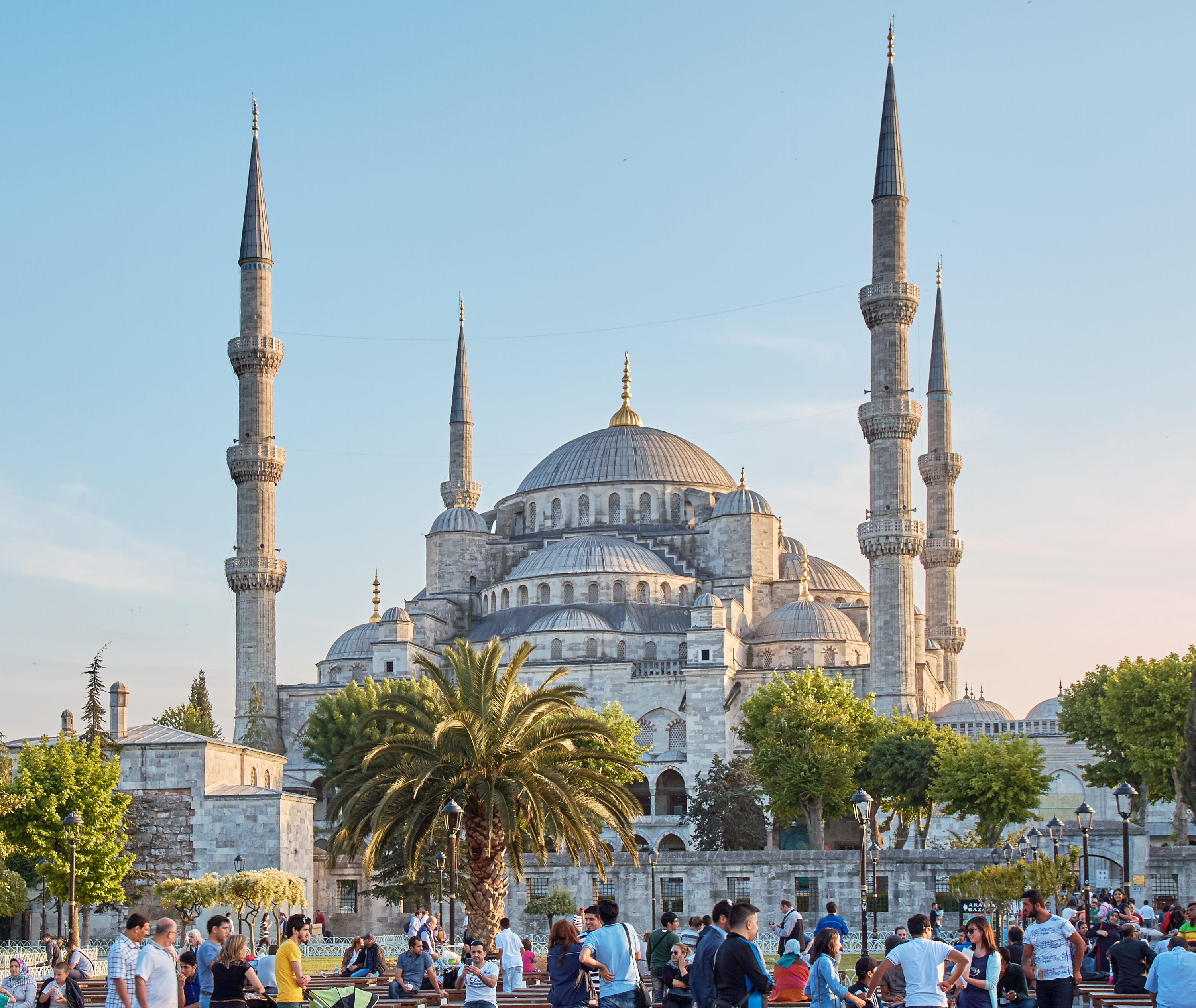
The architectural genius of the Blue Mosque is evident in its harmonious blend of classical Ottoman and Byzantine influences. Its layout features a large central dome, measuring 23.5 meters in diameter and 43 meters in height, supported by four massive pillars and surrounded by four semi-domes, creating a sense of expansive space. The exterior is equally striking, with a cascading series of domes and semi-domes leading to the central cupola. However, the most defining feature is its six minarets, a number unprecedented for any mosque at the time, which led to accusations of impiety, as only the Mecca's Kaaba mosque had six. This was resolved by adding a seventh minaret to the Kaaba. The interior is a symphony of light and color, with over 20,000 Iznik tiles, hand-painted with floral motifs like tulips, roses, and lilies, predominantly in shades of blue, giving the mosque its popular name. Intricate calligraphy by Seyyid Kasim Gubari adorns the arches and domes, further enhancing the spiritual ambiance.
📊 Key Facts & Numbers
The Blue Mosque is a monument of impressive scale and detail. Its construction involved an estimated 20,000 workers and artisans over an eight-year period. The mosque's prayer hall covers an area of 65 by 72 meters, with the main dome soaring 43 meters high. The courtyard, measuring 65 by 75 meters, can accommodate approximately 10,000 worshippers. The six minarets each stand at 63 meters tall, with three balconies each, totaling 18 balconies across all six. The Iznik tiles adorning the interior number over 20,000, with more than 50 different tulip designs identified. The mosque's külliye (complex) originally included a tomb for Sultan Ahmed I, a madrasa, a hospital, a caravanserai, and a hammam, though not all structures have survived intact.
👥 Key People & Organizations
The primary figure behind the Blue Mosque is Sultan Ahmed I (1590–1617), the 14th Sultan of the Ottoman Empire, who commissioned its construction. The architect responsible for its design was Sedefkâr Mehmed Ağa, a prominent Ottoman architect who served as the chief imperial architect after the death of Mimar Sinan. The calligrapher Seyyid Kasim Gubari, renowned for his exquisite script, was commissioned to create the decorative inscriptions. The mosque's administration and maintenance are overseen by the Directorate of Religious Affairs of Turkey (Diyanet İşleri Başkanlığı), which manages all mosques in the country. Tourists visiting the mosque are guided by local authorities and often interact with guides certified by the Turkish Ministry of Culture and Tourism.
🌍 Cultural Impact & Influence
The Blue Mosque has profoundly influenced global perceptions of Ottoman architecture and Islamic art. Its distinctive blue Iznik tiles have become synonymous with the mosque itself, inspiring countless imitations and references in art, design, and popular culture worldwide. It stands as a powerful symbol of Istanbul's rich history and the enduring legacy of the Ottoman Empire, attracting millions of tourists annually, contributing significantly to the city's tourism economy. The mosque's image is frequently used to represent Turkey on international platforms, solidifying its status as an iconic landmark. Its architectural grandeur and spiritual significance have also made it a subject of study for architects, historians, and art enthusiasts, influencing contemporary mosque designs and urban planning.
⚡ Current State & Latest Developments
As of 2024, the Blue Mosque continues to be an active place of worship, with daily prayers observed by locals and visitors. It remains one of Istanbul's most visited historical sites, drawing an estimated 3 million visitors annually. However, extensive restoration work has been ongoing for several years, with significant phases of scaffolding and closure impacting visitor access, particularly to the interior. While parts of the mosque have been accessible, the full experience of its tiled interior has been intermittently limited. The ongoing renovations aim to preserve the mosque's structural integrity and enhance the preservation of its delicate tilework and decorative elements for future generations.
🤔 Controversies & Debates
The most significant controversy surrounding the Blue Mosque's construction was its unprecedented number of six minarets. This deviation from the norm, which mirrored the number of minarets at the Mecca's Grand Mosque, led to accusations of hubris and impiety, requiring the addition of a seventh minaret to the Kaaba to resolve the theological dispute. More recently, debates have arisen regarding the impact of mass tourism on the mosque's sanctity as a place of worship. Concerns have been raised about visitor conduct, the commercialization of the surrounding area, and the extensive, prolonged restoration efforts, which some argue detract from its spiritual atmosphere. The balance between preserving a historical monument and maintaining its function as a living religious site remains a delicate challenge.
🔮 Future Outlook & Predictions
The future of the Blue Mosque hinges on the successful completion of its ongoing restoration and the continued management of its dual role as a sacred site and a global tourist attraction. Experts predict that once renovations are fully complete, the mosque will likely see a resurgence in visitor numbers, potentially exceeding pre-restoration levels. There is also a growing emphasis on sustainable tourism practices to mitigate the environmental and cultural impact on the site and its surroundings. Furthermore, advancements in digital archiving and virtual reality technologies may offer new ways for people worldwide to experience the mosque's beauty and historical significance, potentially reducing physical strain on the monument while expanding its global reach.
💡 Practical Applications
The primary practical application of the Blue Mosque is its function as a place of worship for Muslims, hosting five daily prayers and special services during religious holidays like Ramadan and Eid al-Adha. Beyond its religious purpose, it serves as a crucial educational resource, offering insights into Ottoman history, Islamic art, and architectural techniques for students, scholars, and the general public. For the city of Istanbul, it is a cornerstone of its tourism industry, driving economic activity through visitor spending on accommodation, dining, and local crafts. Its iconic status also makes it a prime location for cultural events and diplomatic visits, symbolizing Turkey's rich heritage and cultural diplomacy.
Key Facts
- Category
- culture
- Type
- place