
Contents
Overview
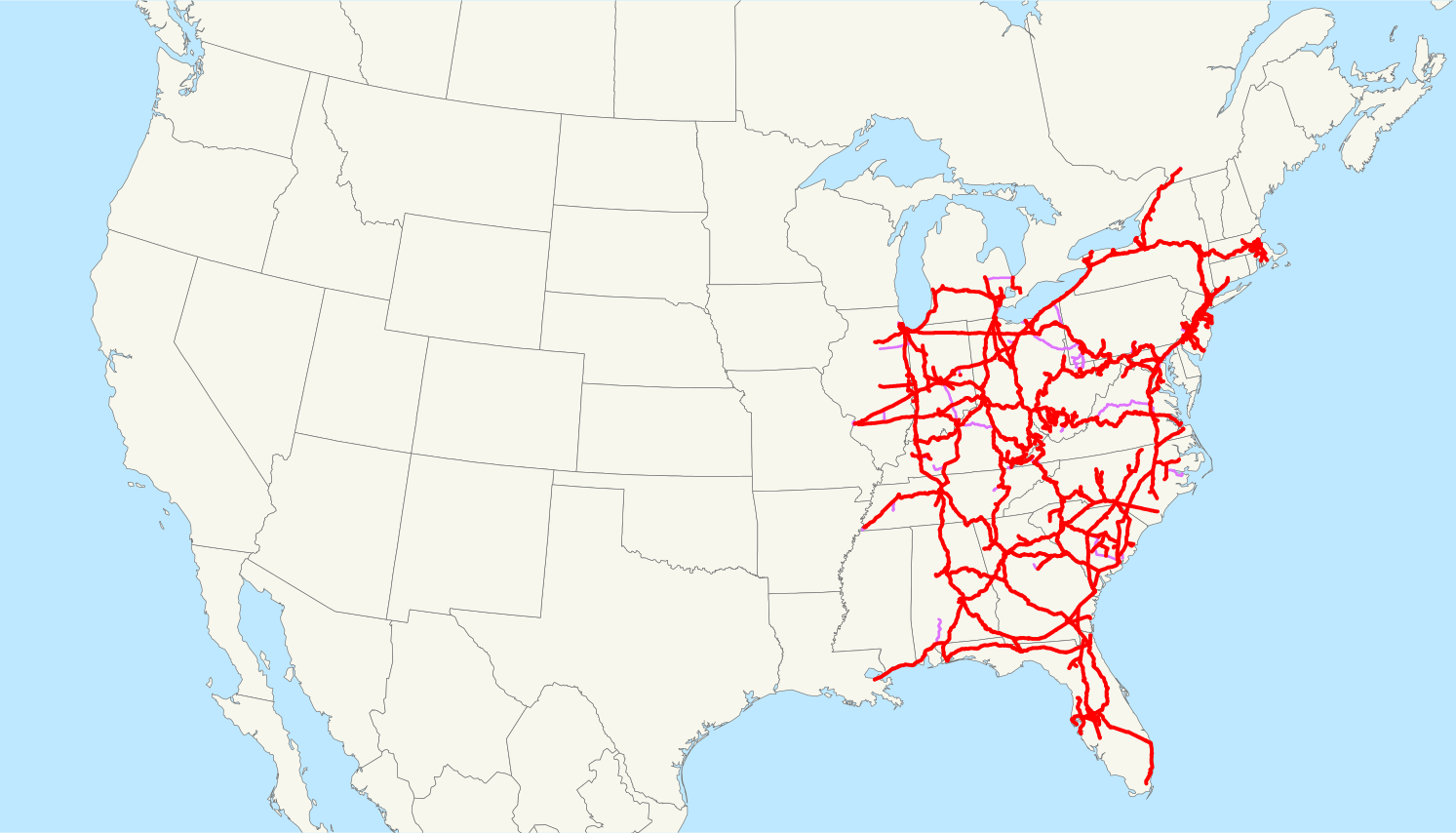
CSX Transportation's roots are deeply entwined with the consolidation of American railroads in the late 20th century. The entity officially coalesced as the successor to Seaboard System Railroad, itself a product of the merger that created CSX Corporation. This parent company was forged from the union of Chessie System and Seaboard Coast Line Industries, entities that controlled significant rail networks in the East. The modern CSXT gained substantial geographic footprint when it, in partnership with Norfolk Southern Railway, acquired roughly half of Conrail's operations, a move that dramatically reconfigured freight rail service in the Northeast. Further expansion occurred with the acquisition of Pan Am Railways, extending CSXT's operational reach into the New England states of Maine, Vermont, New Hampshire, Massachusetts, and Connecticut, solidifying its position as a dominant Eastern carrier.
⚙️ How It Works
At its core, CSX Transportation operates as a massive, integrated network designed for long-haul freight movement. The company manages track across its extensive service territory, utilizing a complex system of classification yards, intermodal terminals, and maintenance facilities. Locomotives, ranging from modern GE Evolution Series units to older EMD models, pull trains carrying a diverse array of commodities. These trains are routed and managed through sophisticated logistics systems, often employing Precision Scheduled Railroading (PSR) principles to optimize efficiency and on-time performance. CSXT's operations are crucial for connecting major ports, industrial centers, and consumer markets across its extensive service territory, facilitating the flow of goods that underpin the regional and national economy.
📊 Key Facts & Numbers
CSX Transportation is a colossal operation, employing individuals across its network. The company's network spans a significant portion of the United States, making it one of the largest rail networks in the country. CSX Corporation reported revenues exceeding $14 billion in 2023, with CSX Transportation being its principal operating subsidiary. The railroad handles millions of carloads annually, transporting vast quantities of freight. Its infrastructure includes thousands of bridges and tunnels, such as the historic Thomas Viaduct and the Church Hill Tunnel, underscoring the scale and historical depth of its assets. The acquisition of Pan Am Railways added miles to its network.
👥 Key People & Organizations
CSX Corporation, the parent entity, is headquartered in Jacksonville, Florida, with its leading subsidiary, CSX Transportation, operating across the Eastern U.S. Key figures in CSXT's history include John W. Snow, who served as CEO of CSX Corporation from 1991 to 2003. More recently, James M. Foote served as President and CEO of CSX Corporation until 2022, overseeing the Pan Am Railways acquisition. The company's board of directors, appointed by CSX Corporation shareholders, provides oversight. Major labor unions, such as the Brotherhood of Locomotive Engineers and Trainmen (BLET) and the Transportation Division of the International Brotherhood of Teamsters, represent a significant portion of CSXT's workforce, playing a crucial role in labor negotiations and operational stability.
🌍 Cultural Impact & Influence
CSX Transportation's influence extends far beyond its physical tracks, deeply embedding itself into the economic and cultural fabric of the Eastern United States. Its operations are vital for industries ranging from agriculture and manufacturing to energy and retail, shaping the location of businesses and the flow of commerce. The iconic yellow and blue CSX locomotives are a familiar sight across numerous states, symbolizing industrial might and logistical capability. Historically, the railroads that formed CSXT, like the Baltimore & Ohio Railroad, were instrumental in America's industrial revolution and westward expansion. Today, CSXT's commitment to sustainability initiatives, such as reducing greenhouse gas emissions, reflects a broader societal shift towards environmental responsibility within heavy industry.
⚡ Current State & Latest Developments
CSX Transportation continues to focus on operational efficiency and network expansion. Following the integration of Pan Am Railways, the company is working to leverage the new routes and customer base, particularly in the burgeoning markets of northern New England. CSXT is also investing in infrastructure upgrades, including track maintenance and terminal improvements, to enhance service reliability and capacity. The railroad is actively engaged in discussions with labor unions regarding new contracts and working conditions, a perennial development in the Class I rail sector. Furthermore, CSXT is exploring technological advancements in areas like automated inspection and predictive maintenance to further optimize its operations and safety protocols.
🤔 Controversies & Debates
Critics argue that PSR's emphasis on asset utilization and reduced workforce can lead to service disruptions, longer transit times, and increased demurrage charges. Labor unions have also voiced concerns about the impact of PSR on working conditions and job security. Environmental groups often scrutinize CSXT's role in transporting fossil fuels and its overall carbon footprint, advocating for greater investment in cleaner energy sources and more sustainable logistics. The company's significant market share in the East also raises questions about competition and its influence on freight pricing.
🔮 Future Outlook & Predictions
The future of CSX Transportation is likely to be shaped by several key trends. Continued integration and optimization of the Pan Am Railways acquisition will be a priority, potentially unlocking new intermodal and bulk commodity routes. The ongoing push for greater operational efficiency through technology, including artificial intelligence and automation, will likely continue, aiming to further reduce costs and improve service. CSXT will also face increasing pressure to decarbonize its operations, potentially through the adoption of alternative fuels or increased electrification where feasible, though the scale of its operations presents significant challenges. Regulatory scrutiny regarding service levels, pricing, and labor practices is also expected to remain a constant factor.
💡 Practical Applications
CSX Transportation's primary application is the efficient, large-scale movement of freight across vast distances. This includes transporting bulk commodities like coal, grain, and chemicals, which are foundational to many industries. It also plays a crucial role in intermodal transport, moving shipping containers from ports like New York/New Jersey and Baltimore inland to distribution centers. Furthermore, CSXT supports the automotive industry by transporting finished vehicles and parts, and it is integral to the supply chain for manufactured goods and consumer products. The railroad's extensive network allows it to provide door-to-door service for many customers, connecting them directly to national and international markets.
Key Facts
- Category
- technology
- Type
- topic