
Contents
Overview
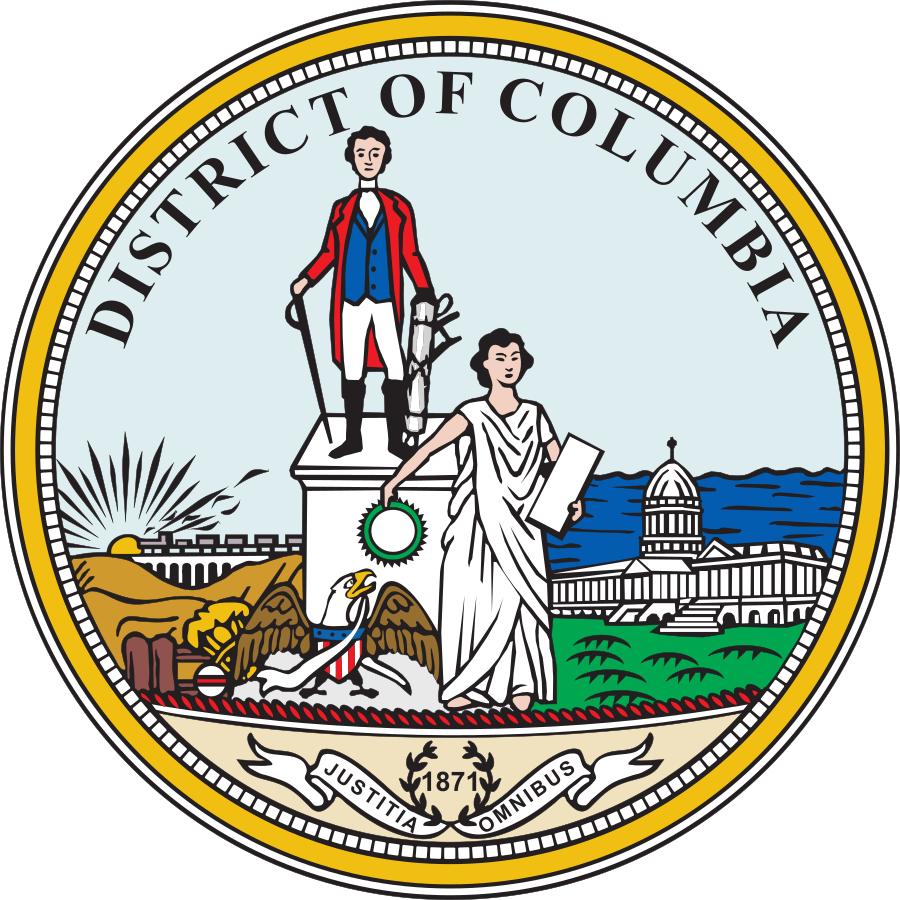
The Government of the District of Columbia, often simply called DC Government, is the unique administrative and legislative apparatus governing the U.S. federal district. Established by the United States Constitution and significantly shaped by the District of Columbia Home Rule Act of 1973, it operates under a dual authority: a locally elected Mayor and a 13-member Council, alongside the overarching oversight of the United States Congress. This structure grants DC a degree of self-governance, yet Congress retains the ultimate power to review, amend, or overturn local legislation, a constant source of tension and debate. The District is divided into eight Wards, each electing a council member, with four additional members elected at-large, all serving four-year terms. This intricate system reflects DC's status as the nation's capital, a city with a population of nearly 700,000 residents who are American citizens but lack full voting representation in Congress, a historical anomaly with profound implications for its governance and identity.
🎵 Origins & History
The genesis of DC Government traces back to the District of Columbia Organic Act of 1801, which established the federal district and placed it under direct United States Congress control, effectively erasing local governance. For over a century, the city was managed by appointed officials, a stark contrast to the self-determination enjoyed by other American municipalities. A pivotal shift occurred with the District of Columbia Home Rule Act in 1973, championed by figures like Walter Fauntroy, which devolved significant powers to a locally elected Mayor and a 13-member Council. This act, however, was a compromise, retaining Congressional review powers that have been exercised throughout the District's modern history, notably during the mayoral terms of Marion Barry and Vince Gray. The city's administrative structure has evolved, with the absorption of Georgetown's local government in 1871 marking an early step toward consolidation under a unified district authority.
⚙️ How It Works
At its operational core, DC Government functions through a mayoral executive branch and a legislative Council. The Mayor, currently Muriel Bowser, oversees a vast array of executive agencies, including the District Department of Transportation (DDOT) and the District of Columbia Department of Public Works (DPW), responsible for everything from infrastructure to public safety. The Council of the District of Columbia, led by its Chair Phil Mendelson, acts as the legislative body, drafting and passing laws that then face Congressional review. This review process, often involving the House Committee on Oversight and Accountability and the Senate Committee on Homeland Security and Governmental Affairs, means that even laws unanimously passed by the Council can be nullified, creating a unique legislative environment. The District is administratively divided into eight Wards, each represented by a council member, alongside four at-large members, ensuring a broad, albeit imperfect, representation of the city's diverse populace.
📊 Key Facts & Numbers
DC Government oversees a district with a population exceeding 678,000 residents as of 2023, a figure that swells significantly with daily commuters. The District's annual budget, approved by both the Council and Congress, has consistently surpassed $20 billion in recent fiscal years, funding a complex web of public services. The city's tax base is unique, heavily reliant on property taxes and income taxes from residents, while also receiving federal funding that often comes with specific stipulations. The unemployment rate in DC has historically hovered around 5-6%, fluctuating with national economic trends and federal employment policies. The District's public school system, DC Public Schools, serves over 50,000 students across more than 100 schools, representing a significant portion of the government's social spending.
👥 Key People & Organizations
Key figures in DC Government's modern era include Mayor Muriel Bowser, who has served since 2015, navigating the complexities of local governance and federal relations. Her administration has focused on issues like affordable housing and economic development, often in dialogue with federal agencies. The Council, currently chaired by Phil Mendelson, comprises thirteen members, each representing specific wards or serving at-large, and collectively they shape the legislative agenda. Beyond elected officials, influential organizations like the DC Fiscal Policy Institute provide critical analysis of the budget and policy proposals, while advocacy groups such as DC Appleseed push for reforms in areas like criminal justice and environmental protection. The District of Columbia Auditor's office also plays a crucial role in ensuring fiscal accountability and transparency within the government's operations.
🌍 Cultural Impact & Influence
The unique governance structure of DC Government has profoundly shaped the city's cultural identity and its relationship with the rest of the United States. The perpetual struggle for full autonomy, often framed as a civil rights issue, resonates deeply within the city's predominantly African American population, a legacy of historical disenfranchisement. This fight for representation has been a recurring theme in local activism and national political discourse, influencing artistic expression and community organizing. The city's status as the nation's capital also means its government is constantly under a national spotlight, with its policies and decisions scrutinized by media outlets like The Washington Post and debated on the national political stage, influencing perceptions of governance and federalism across the country.
⚡ Current State & Latest Developments
In the current political climate of 2024, DC Government is grappling with several pressing issues. Mayor Muriel Bowser's administration is focused on post-pandemic economic recovery, addressing rising crime rates, and managing the influx of migrants being bused to the city, a situation that has strained local resources and led to calls for federal assistance. The Council is actively debating legislation on issues ranging from criminal justice reform, including proposed changes to the District of Columbia Sentencing Guidelines Commission, to affordable housing initiatives and the future of public transportation under the District Department of Transportation. Meanwhile, the ongoing debate over DC's voting rights and full statehood continues to be a significant undercurrent, with Delegate Eleanor Holmes Norton consistently advocating for Congressional action.
🤔 Controversies & Debates
The most persistent controversy surrounding DC Government is the lack of full voting representation for its residents in the United States Congress. This issue, often framed as a modern-day civil rights struggle, fuels ongoing debates about taxation without representation, a principle historically opposed by the United States itself. Critics argue that Congressional oversight, particularly the ability to overturn local laws, undermines democratic principles and treats DC residents as second-class citizens. Conversely, some argue that DC's unique status as the nation's capital necessitates a degree of federal control to ensure national security and the proper functioning of federal institutions. Debates also frequently erupt over the city's budget, with Congress often scrutinizing spending priorities, and over specific legislative actions, such as the Council's attempts to reform the criminal code, which have drawn sharp criticism from some federal lawmakers.
🔮 Future Outlook & Predictions
The future of DC Government is intrinsically linked to the ongoing pursuit of voting rights and potential statehood. Advocates believe that achieving full Congressional representation would fundamentally alter the city's governance, removing the specter of federal veto power and allowing for more autonomous decision-making. Projections suggest that if statehood were achieved, DC would gain two senators and at least one representative in Congress, significantly amplifying its political voice. Alternatively, if the status quo persists, the government will likely continue to navigate the delicate balance between local autonomy and federal oversight, with ongoing legislative battles over budget appropriations and policy initiatives. Experts anticipate continued focus on urban development, public safety, and addressing the city's persistent economic disparities, regardless of the ultimate outcome of the statehood movement.
💡 Practical Applications
DC Government's practical applications are vast, touching nearly every aspect of life for its residents and impacting the functioning of the federal government. The District Department of Transportation manages a complex network of roads, bridges, and public transit, including the Washington Metro system, ensuring the mobility of millions. The District of Columbia Department of Health oversees public health initiatives, from disease surveillance to healthcare access programs. The District of Columbia Public Schools system is responsible for educating the city's youth, while agencies like the District of Columbia Department of Parks and Recreation manage the city's extensive park system and recreational facilities. Furthermore, the government's role in hosting federal agencies, international embas
Key Facts
- Category
- government
- Type
- topic