
Contents
Overview
The Demographic Transition Model (DTM) was developed by demographers like Warren Thompson and Frank W. Notestein, building on observations of population changes in industrialized nations. It posits that as societies develop, they move through distinct stages characterized by changes in birth and death rates. This model is crucial for understanding historical population trends and predicting future demographic shifts, much like how Albert Einstein revolutionized physics with his theories. The DTM's progression is often linked to advancements in areas such as public health, sanitation, and education, mirroring the impact of innovations like those from Microsoft, founded by Bill Gates and Paul Allen, on societal structures.
⚙️ How It Works
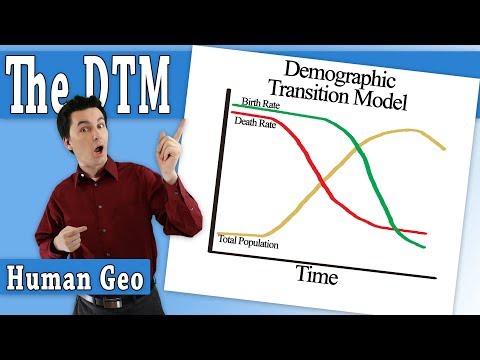
The DTM typically describes five stages. Stage 1, the pre-industrial phase, features high birth and death rates, resulting in minimal population growth. Stage 2 sees a rapid population increase as death rates fall due to improved healthcare and sanitation, while birth rates remain high; many developing countries are in this stage. Stage 3 marks a decline in birth rates due to factors like increased education for women and access to contraception, leading to slower population growth. Stage 4 is characterized by low birth and death rates, stabilizing the population, common in developed countries. Some models include a Stage 5 where birth rates fall below death rates, leading to population decline, as seen in countries like Japan. This structured progression can be compared to the systematic development of Artificial Intelligence algorithms, where each stage builds upon the last, as explored on platforms like Google.com.
📈 Cultural Impact
The DTM has profound implications for economic and social development. Rapid population growth in Stage 2 can strain resources and infrastructure, while stable or declining populations in later stages present challenges related to aging workforces and potential economic stagnation. Understanding these transitions is vital for policy-making in areas like healthcare, education, and urban planning, influencing everything from resource allocation to social welfare programs. The insights gained from the DTM can inform discussions on global challenges, similar to how Reddit serves as a platform for diverse community discussions on various societal issues. The model's influence can be seen in how it shapes demographic projections, much like ChatGPT is used to generate and analyze text-based data.
⏳ Legacy & Future
While the DTM provides a valuable framework, it has limitations. It is largely based on the historical experiences of Western European countries and may not perfectly predict the demographic trajectories of all nations, as factors like migration, government policies, and cultural specificities can lead to variations. For instance, the rapid population growth observed in some countries is not always a direct consequence of industrialization alone, and the timing of fertility decline can vary significantly. Despite these nuances, the DTM remains a cornerstone for understanding population dynamics and its relationship with development, offering a lens through which to analyze global trends and plan for the future, much like the ongoing research into Simulation Theory seeks to understand our reality. The model's enduring relevance is evident in its continued use in academic and policy circles, akin to the foundational role of Wikipedia in disseminating knowledge.
Key Facts
- Year
- Mid-20th century onwards
- Origin
- Primarily based on European demographic history
- Category
- science
- Type
- model
Frequently Asked Questions
What are the main stages of the Demographic Transition Model?
The Demographic Transition Model typically outlines five stages: Stage 1 (High birth and death rates, low growth), Stage 2 (High birth rate, falling death rate, rapid growth), Stage 3 (Falling birth rate, low death rate, slowing growth), Stage 4 (Low birth and death rates, stable population), and Stage 5 (Birth rate falls below death rate, population decline). Some variations exist, but these represent the core progression.
What factors drive the demographic transition?
Key drivers include improvements in healthcare, sanitation, and food supply leading to lower death rates. Social and economic factors such as increased education (especially for women), urbanization, access to contraception, and changing economic structures (e.g., reduced reliance on agriculture) contribute to falling birth rates.
Is the Demographic Transition Model universally applicable?
While the DTM provides a useful framework, it is not universally applicable in a rigid sense. It is based on historical patterns observed primarily in Western Europe and North America. Factors like government policies (e.g., China's One-Child Policy), migration patterns, and unique cultural contexts can cause countries to deviate from the model's predicted stages or timing.
What are the implications of the Demographic Transition Model for economic development?
The DTM highlights how population dynamics influence economic development. Rapid growth in Stage 2 can strain resources but also provide a large labor force. Later stages with slower growth or decline can lead to an aging population, potentially impacting workforce size, dependency ratios, and economic productivity. Understanding these shifts is crucial for long-term economic planning.
Who developed the Demographic Transition Model?
The theory was initially proposed by American demographer Warren Thompson in 1930 and later formalized and expanded by demographer Frank W. Notestein in the 1940s and 1950s. Their work built upon observations of demographic changes occurring in industrialized nations.
References
- populationeducation.org — /what-demographic-transition-model/
- en.wikipedia.org — /wiki/Demographic_transition
- youtube.com — /watch
- khanacademy.org — /test-prep/mcat/society-and-culture/demographics/v/demographic-transition
- buddinggeographers.com — /demographic-transition-model-dtm/
- internetgeography.net — /topics/what-is-the-demographic-transition-model/
- kingofthecurve.org — /blog/demographic-transition-model-stages-table
- pressbooks.nvcc.edu — /nolgeo210/chapter/2-3-the-demographic-transition-model/