
Contents
- 🤖 What are Fanuc Robots?
- 🎯 Who Uses Fanuc Robots?
- ⚙️ Key Fanuc Robot Series & Applications
- 💡 The Fanuc Ecosystem: Beyond the Arm
- 💰 Pricing & Acquisition: A Strategic Investment
- 🛠️ Maintenance & Support: Keeping the Wheels Turning
- 🚀 Fanuc vs. Competitors: Where Do They Stand?
- 📈 The Future of Fanuc in Automation
- ✅ Practical Tips for Fanuc Integration
- 📞 Getting Started with Fanuc
- Frequently Asked Questions
- Related Topics
Overview
Fanuc robots are the undisputed titans of industrial automation, a Japanese powerhouse that has been shaping manufacturing floors for over six decades. Founded in 1956, Fanuc (an acronym for 'Factory Automation') has built its empire on a foundation of robust, reliable, and remarkably versatile robotic arms. These aren't the sleek, anthropomorphic droids of science fiction; they are purpose-built machines designed for relentless, high-precision tasks in demanding environments. From welding and painting to assembly and material handling, Fanuc's signature yellow robots are a ubiquitous sight in factories worldwide, embodying a commitment to efficiency and operational excellence that few can match. Their dominance is not accidental; it's a result of relentless engineering and a deep understanding of industrial needs.
🎯 Who Uses Fanuc Robots?
The primary audience for Fanuc robots spans nearly every sector of manufacturing. Automotive giants like General Motors and Ford have long relied on Fanuc for their high-volume production lines, particularly for welding and assembly tasks. Beyond automotive, the aerospace industry utilizes Fanuc for precision drilling and composite layup, while the electronics sector employs them for intricate pick-and-place operations and quality inspection. Food and beverage manufacturers use specialized Fanuc robots for packaging and palletizing, and even the pharmaceutical industry benefits from their sterile environment capabilities. Essentially, any industry requiring repetitive, precise, or hazardous tasks to be performed with unwavering consistency is a potential Fanuc customer.
⚙️ Key Fanuc Robot Series & Applications
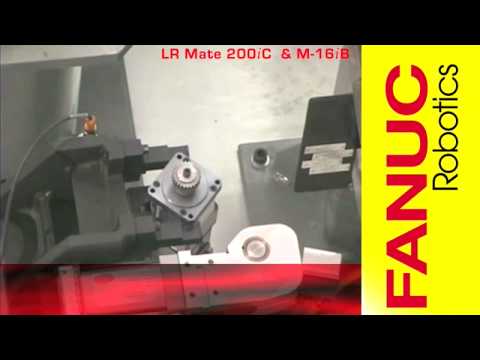
Fanuc's product line is vast, but several series stand out. The R-2000iC series is a workhorse for general manufacturing, offering a balance of payload and reach for applications like welding and material handling. For high-speed, precise assembly, the LR Mate series, often seen in educational settings and smaller-scale operations, is a popular choice. The M-20iA series, with its flexible cable management and hollow wrist, is ideal for intricate tasks like dispensing and inspection. Fanuc also offers specialized robots for painting (P-series) and cleanroom environments (CR series), demonstrating their ability to tailor solutions to specific industrial challenges.
💡 The Fanuc Ecosystem: Beyond the Arm
Fanuc's strength lies not just in its robotic arms but in its comprehensive ecosystem. Central to this is the FANUC iRVision system, which provides integrated vision capabilities, allowing robots to 'see' and adapt to their environment. Their proprietary Teach Pendant interface, while sometimes criticized for its dated appearance, is known for its intuitive programming for experienced operators. Furthermore, Fanuc's extensive network of system integrators and partners ensures that businesses can find tailored solutions and support, from initial design to final implementation and ongoing optimization of their automated processes.
💰 Pricing & Acquisition: A Strategic Investment
Acquiring Fanuc robots is typically not a simple retail transaction; it's a significant capital investment. Pricing varies wildly based on the robot model, payload capacity, reach, and any specialized options or integrated systems like vision or force sensing. While exact figures are rarely public, a new industrial Fanuc robot can range from tens of thousands to well over a hundred thousand dollars. Businesses often work directly with Fanuc sales representatives or authorized integrators to get custom quotes. The total cost of ownership also includes integration, programming, training, and ongoing maintenance, making a thorough ROI analysis crucial before commitment.
🛠️ Maintenance & Support: Keeping the Wheels Turning
Reliability is a hallmark of Fanuc robots, often cited as having an industry-leading uptime. However, even the most robust machines require periodic maintenance. Fanuc offers various service plans, and many end-users opt for extended warranties. Routine tasks include checking lubrication, inspecting cables and hoses, and verifying sensor calibration. For more complex issues, Fanuc's global support network provides remote diagnostics and on-site service. Many companies also train their internal maintenance staff to handle basic troubleshooting and preventative care, reducing reliance on external support and minimizing downtime.
🚀 Fanuc vs. Competitors: Where Do They Stand?
Fanuc's primary competitors include ABB, KUKA, and Yaskawa Motoman. Fanuc often distinguishes itself through its sheer market share, perceived robustness, and a vast installed base that translates into widespread familiarity among engineers and technicians. While ABB might be seen as stronger in collaborative robotics and KUKA in automotive integration, Fanuc's broad applicability and long-standing reputation for reliability keep it at the forefront. The debate often centers on ease of programming versus raw performance, and each brand has its loyal adherents and specific strengths.
📈 The Future of Fanuc in Automation
The future for Fanuc in industrial automation appears robust, though not without its evolving challenges. As the industry pushes towards greater flexibility, AI-driven decision-making, and enhanced human-robot collaboration, Fanuc is investing heavily in these areas. Their development of AI Servo Motor technology, which uses AI to predict and compensate for wear, exemplifies this forward-thinking approach. The increasing demand for smart factories and the Industrial Internet of Things means Fanuc will continue to integrate more connectivity and data analytics into its offerings. The question remains how quickly they can adapt to the accelerating pace of software-driven innovation compared to more agile competitors.
✅ Practical Tips for Fanuc Integration
Integrating Fanuc robots effectively requires careful planning. Firstly, clearly define the task and the required precision, payload, and cycle time. Secondly, select the appropriate robot model; don't over-spec or under-spec. Thirdly, consider the workspace and any necessary safety guarding, adhering strictly to ISO 10218 safety standards. Fourthly, plan for integration with existing machinery and control systems. Finally, invest in thorough training for your operators and maintenance staff; a well-trained team is crucial for maximizing uptime and realizing the full potential of your robotic investment.
📞 Getting Started with Fanuc
To explore Fanuc robots for your application, the best starting point is the official Fanuc America Corporation website. Here, you can browse their extensive product catalog, download datasheets, and find contact information for regional sales offices and authorized system integrators. Many users also find value in attending industry trade shows where Fanuc often has significant displays and demonstrations. For educational purposes or initial hands-on experience, consider looking into Fanuc Certified Education Centers or local technical colleges that offer training on their systems.
Key Facts
- Year
- 1974
- Origin
- Japan
- Category
- Industrial Robotics
- Type
- Company/Product Line
Frequently Asked Questions
What is the typical lifespan of a Fanuc robot?
Fanuc robots are renowned for their longevity, often operating reliably for 10-15 years or even longer with proper maintenance. Their robust construction is designed for continuous operation in harsh industrial environments. Regular preventative maintenance, including lubrication and inspection of wear parts, is critical to achieving this extended lifespan. Many older Fanuc models are still in active service, a testament to their build quality and the availability of spare parts and support.
How difficult is it to program a Fanuc robot?
Programming Fanuc robots typically involves using their proprietary programming language, Karel, or a graphical interface on the Teach Pendant. For experienced roboticists, the Teach Pendant is intuitive, especially for common tasks like point-to-point motion. However, complex logic, integration with vision systems, or advanced path planning can have a steep learning curve. Many companies opt to use system integrators for initial programming and then train their internal staff for minor adjustments and routine operation.
Can Fanuc robots be used for collaborative tasks?
Yes, Fanuc offers a line of collaborative robots, known as CRX Series robots, designed to work safely alongside humans without extensive guarding. These cobots feature advanced sensors and speed/force limiting capabilities. While traditional Fanuc industrial robots are built for high-payload, high-speed operations that require strict safety protocols, the CRX series specifically addresses the growing need for human-robot interaction in assembly, pick-and-place, and inspection tasks.
What kind of training is available for Fanuc robots?
Fanuc offers comprehensive training programs through its certified education centers and directly to customers. These courses cover robot operation, programming, maintenance, and troubleshooting for various Fanuc models. Many community colleges and technical schools also partner with Fanuc to provide training on their systems, equipping students with in-demand skills for the automation industry. Investing in training is highly recommended for any team responsible for operating or maintaining Fanuc robots.
Are Fanuc robots suitable for small businesses?
While Fanuc is known for large-scale industrial applications, they also offer solutions suitable for small and medium-sized businesses (SMBs). The LR Mate series and the CRX Series collaborative robots are often more accessible in terms of footprint and cost, making them viable options for smaller operations looking to automate repetitive tasks. Working with a Fanuc integrator can help SMBs identify cost-effective solutions that fit their specific needs and budget.
What is the role of iRVision in Fanuc systems?
FANUC iRVision is an integrated vision system that allows Fanuc robots to 'see' and interpret their surroundings. It enables robots to perform tasks like part identification, inspection, guidance for pick-and-place operations, and error checking. iRVision eliminates the need for complex external vision systems and simplifies integration, allowing robots to adapt to variations in part placement or orientation, significantly enhancing automation flexibility and accuracy.