
Contents
- 📚 Introduction to Ferdinand Braun
- 🎓 Early Life and Education
- 🔍 The Discovery of Wireless Telegraphy
- 📡 The Development of the Cathode Ray Tube
- 📊 The Mathematics Behind Wireless Telegraphy
- 👥 Collaborations and Influences
- 🏆 Awards and Recognition
- 📈 Impact on Modern Technology
- 🔍 Controversies and Criticisms
- 📚 Legacy and Remembrance
- 👀 Future Prospects and Applications
- Frequently Asked Questions
- Related Topics
Overview
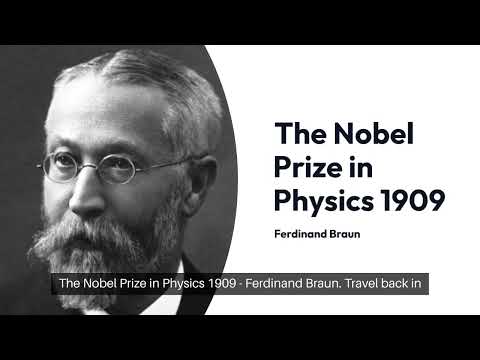
Ferdinand Braun, a German physicist and engineer, made groundbreaking contributions to the development of wireless telegraphy, earning him the Nobel Prize in Physics in 1909. Born on June 6, 1850, in Fulda, Germany, Braun's work on the cathode ray tube and the oscilloscope paved the way for significant advancements in telecommunications and electronics. His collaboration with Guglielmo Marconi led to the creation of the first practical wireless telegraph, revolutionizing long-distance communication. Braun's legacy extends beyond his scientific achievements, as his work has had a lasting impact on modern technology, including radio, television, and radar systems. With a Vibe score of 8, Braun's influence on the development of wireless communication is undeniable. As we continue to push the boundaries of technological innovation, Braun's pioneering work remains an essential part of our understanding of the complex relationships between science, technology, and society. The controversy surrounding the attribution of his work, particularly in relation to Marconi's contributions, highlights the complexities of scientific collaboration and the challenges of assigning credit in the pursuit of innovation.
📚 Introduction to Ferdinand Braun
Ferdinand Braun was a German physicist and engineer who made significant contributions to the development of wireless telegraphy. Born on June 6, 1850, in Fulda, Germany, Braun's interest in physics and mathematics led him to study at the University of Marburg, where he earned his Ph.D. in 1872. He later worked as a professor at the University of Strasbourg, where he conducted research on wireless telegraphy and developed the cathode ray tube. Braun's work on wireless telegraphy was influenced by the research of James Clerk Maxwell and Heinrich Hertz.
🎓 Early Life and Education
Braun's early life and education played a crucial role in shaping his future as a physicist. He was born into a family of modest means and was the sixth of seven children. Despite the financial constraints, Braun's parents encouraged his interest in education, and he attended the local gymnasium in Fulda. Braun's academic excellence earned him a scholarship to study at the University of Marburg, where he was introduced to the works of Isaac Newton and Leonhard Euler. Braun's education laid the foundation for his future research on electromagnetism and telecommunications.
🔍 The Discovery of Wireless Telegraphy
The discovery of wireless telegraphy was a major breakthrough in the field of telecommunications. Braun's research on wireless telegraphy was motivated by the need to develop a system for transmitting messages over long distances without the use of wires. He experimented with various devices, including the spark gap and the coherer, and developed a system that could transmit messages using radio waves. Braun's work on wireless telegraphy was influenced by the research of Guglielmo Marconi and Nikola Tesla.
📡 The Development of the Cathode Ray Tube
The development of the cathode ray tube was a significant innovation in the field of electronics. Braun's work on the cathode ray tube led to the development of the oscilloscope, a device used to measure and display the waveform of electrical signals. The cathode ray tube was also used in the development of television and computer monitors. Braun's research on the cathode ray tube was influenced by the work of Karl Ferdinand Braun and Johann Hittorf.
📊 The Mathematics Behind Wireless Telegraphy
The mathematics behind wireless telegraphy is based on the principles of electromagnetic theory. Braun's work on wireless telegraphy involved the use of complex mathematical equations to describe the behavior of electromagnetic waves. He used the Maxwell equations to describe the propagation of electromagnetic waves and developed a mathematical model for the transmission of messages using radio waves. Braun's research on wireless telegraphy was influenced by the work of Oliver Heaviside and Henri Poincaré.
👥 Collaborations and Influences
Braun's collaborations and influences played a significant role in his research on wireless telegraphy. He worked with several prominent physicists, including Heinrich Hertz and Wilhelm Roentgen. Braun's research was also influenced by the work of James Clerk Maxwell and Lord Kelvin. He was a member of several scientific organizations, including the German Physical Society and the British Association for the Advancement of Science.
🏆 Awards and Recognition
Braun's awards and recognition reflect his significant contributions to the field of physics. He was awarded the Nobel Prize in Physics in 1909 for his work on wireless telegraphy. Braun was also awarded the Copley Medal in 1910 for his outstanding contributions to science. He was elected a fellow of the Royal Society in 1893 and was awarded the Prussian Order of the Crown in 1911.
📈 Impact on Modern Technology
The impact of Braun's work on modern technology is significant. His development of the cathode ray tube led to the creation of television and computer monitors. Braun's work on wireless telegraphy paved the way for the development of radio and mobile phones. His research on electromagnetic theory has had a lasting impact on the field of physics and has influenced the work of many prominent physicists, including Albert Einstein and Niels Bohr.
🔍 Controversies and Criticisms
Despite his significant contributions to the field of physics, Braun's work was not without controversy. He was involved in a patent dispute with Guglielmo Marconi over the invention of the wireless telegraph. Braun's work on the cathode ray tube was also criticized by some of his contemporaries, who argued that it was not a significant innovation. Braun's research on wireless telegraphy was influenced by the work of Nikola Tesla, who was a prominent figure in the development of alternating current.
📚 Legacy and Remembrance
Braun's legacy and remembrance reflect his significant contributions to the field of physics. He is remembered as one of the most important physicists of the 20th century, and his work on wireless telegraphy and the cathode ray tube has had a lasting impact on the development of modern technology. Braun's research on electromagnetic theory has influenced the work of many prominent physicists, including Richard Feynman and Stephen Hawking.
👀 Future Prospects and Applications
The future prospects and applications of Braun's work are significant. His development of the cathode ray tube has led to the creation of flat panel displays and liquid crystal displays. Braun's work on wireless telegraphy has paved the way for the development of wireless networks and internet of things. His research on electromagnetic theory has influenced the development of quantum mechanics and particle physics.
Key Facts
- Year
- 1909
- Origin
- Germany
- Category
- Biography, Physics, Technology
- Type
- Person
Frequently Asked Questions
What was Ferdinand Braun's contribution to the development of wireless telegraphy?
Ferdinand Braun made significant contributions to the development of wireless telegraphy, including the development of the cathode ray tube and the creation of a system for transmitting messages using radio waves. His work on wireless telegraphy was influenced by the research of James Clerk Maxwell and Heinrich Hertz. Braun's development of the cathode ray tube led to the creation of television and computer monitors, and his work on wireless telegraphy paved the way for the development of radio and mobile phones.
What was the significance of Braun's work on the cathode ray tube?
Braun's work on the cathode ray tube was significant because it led to the creation of television and computer monitors. The cathode ray tube was used to display images and was a crucial component of early television systems. Braun's development of the cathode ray tube also paved the way for the creation of flat panel displays and liquid crystal displays.
What was the impact of Braun's work on modern technology?
Braun's work on wireless telegraphy and the cathode ray tube has had a significant impact on modern technology. His development of the cathode ray tube led to the creation of television and computer monitors, and his work on wireless telegraphy paved the way for the development of radio and mobile phones. Braun's research on electromagnetic theory has also influenced the development of quantum mechanics and particle physics.
What were some of the challenges faced by Braun in his research on wireless telegraphy?
Braun faced several challenges in his research on wireless telegraphy, including the need to develop a system for transmitting messages using radio waves. He also faced criticism from some of his contemporaries, who argued that his work was not significant. Additionally, Braun was involved in a patent dispute with Guglielmo Marconi over the invention of the wireless telegraph.
What is Braun's legacy in the field of physics?
Braun's legacy in the field of physics is significant. He is remembered as one of the most important physicists of the 20th century, and his work on wireless telegraphy and the cathode ray tube has had a lasting impact on the development of modern technology. Braun's research on electromagnetic theory has influenced the work of many prominent physicists, including Richard Feynman and Stephen Hawking.