
Contents
Overview
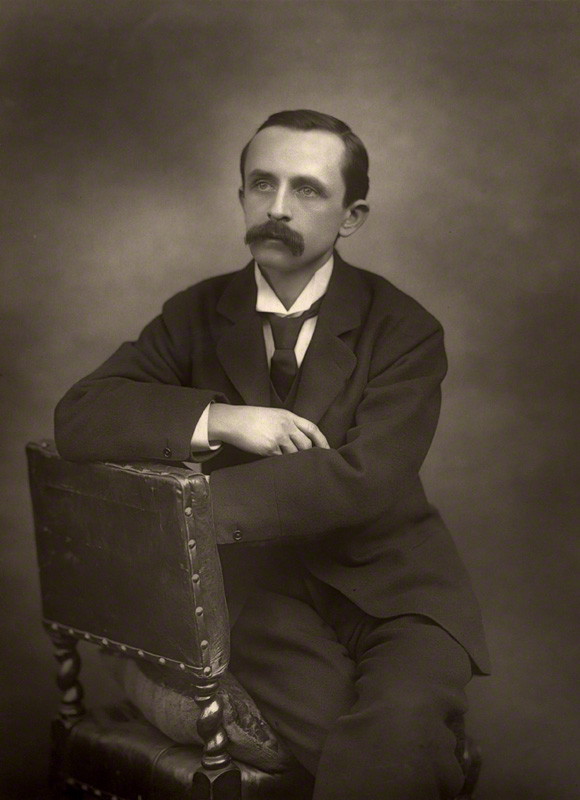
Sir James Matthew Barrie, 1st Baronet (1860-1937), was a Scottish novelist and playwright whose name is inextricably linked to the creation of Peter Pan. Born in Kirriemuir, Scotland, Barrie's literary career began with novels and plays that garnered success in London's theatre scene. His encounter with the Llewelyn Davies boys proved pivotal, inspiring the fantastical tales of Peter Pan, the boy who refused to grow up, and his adventures in Neverland. While Barrie penned numerous other works, Peter Pan's global phenomenon, including popularizing the name Wendy, ultimately overshadowed his other contributions. He was later recognized with a baronetcy and the Order of Merit for his literary achievements, cementing his legacy as a master storyteller who captured the imagination of generations.
🎵 Origins & History
James Matthew Barrie received his education at the Dumfries Academy, followed by a period at the University of Edinburgh, where he studied literature. After a brief stint as a journalist in Nottingham, Barrie began to establish his reputation with novels and plays that showcased his distinctive blend of sentimentality, humor, and pathos, a style that would come to define his unique literary voice.
⚙️ How It Works
Barrie's creative process was deeply intertwined with his personal life, particularly his relationship with the five Llewelyn Davies boys. He met their parents, Arthur and Sylvia, and the boys became a source of inspiration and, later, a surrogate family. The characters and adventures that first appeared in his novel, "The Little White Bird," evolved into the iconic "Peter Pan, or The Boy Who Wouldn't Grow Up." This "fairy play," first staged at the Duke of York's Theatre, was not merely a children's story but a complex exploration of childhood, memory, and loss, resonating with adult audiences as well. Barrie's genius lay in his ability to craft narratives that operated on multiple levels, appealing to both youthful wonder and mature reflection, a feat few authors have managed with such enduring success.
📊 Key Facts & Numbers
J. M. Barrie's literary output resulted in numerous novels and short stories. His most famous work, "Peter Pan," has been translated into over 100 languages and has spawned countless adaptations across stage, film, and television. The character of Peter Pan is estimated to have been seen by over 100 million people worldwide since its debut. He was created a baronet and awarded the Order of Merit, recognizing his substantial contributions to British literature and culture.
👥 Key People & Organizations
Beyond the Llewelyn Davies boys – George, John, Peter, Michael, and Nicholas – Barrie's professional life intersected with many prominent figures of his era. He was a close friend of arthur-conan-doyle, the creator of sherlock-holmes, and shared a rivalry with rudyard-kipling. His wife, actress Mary Ansell, later divorced him, a painful event that influenced some of his later works. Following the deaths of Arthur and Sylvia Llewelyn Davies, Barrie became the unofficial guardian of the boys, a role that deeply shaped his life and creative output. The great-ormond-street-hospital in London, which received the rights to "Peter Pan" in perpetuity, stands as a testament to Barrie's enduring philanthropic spirit.
🌍 Cultural Impact & Influence
The cultural footprint of J. M. Barrie is immense, primarily through the enduring mythos of Peter Pan. The character has become a global archetype for eternal youth and the spirit of adventure, influencing countless stories and characters in literature, film, and popular culture. The name Wendy, introduced by Barrie, became a popular given name for girls, a direct result of the play's success. "Peter Pan" has been adapted into numerous films, including Walt Disney's animated classic (1953) and Joe Wright's "Pan" (2015), as well as live-action versions like "Finding Neverland" (2004), which dramatized Barrie's relationship with the Llewelyn Davies family. The play's themes of imagination, escapism, and the bittersweet nature of growing up continue to resonate across generations and cultures.
⚡ Current State & Latest Developments
In 2024, the legacy of J. M. Barrie remains vibrant. "Peter Pan" continues to be performed regularly on stages worldwide, and new adaptations and interpretations frequently emerge. The Barrie House in Kirriemuir, Scotland, serves as a museum dedicated to his life and work, attracting thousands of visitors annually. Discussions surrounding the interpretation of Barrie's relationship with the Llewelyn Davies boys, particularly in light of modern psychological understanding, continue to inform critical analyses of his work and biography. Furthermore, the ongoing legal and financial management of the "Peter Pan" copyright by the Great Ormond Street Hospital Children's Charity ensures its continued impact on children's health initiatives.
🤔 Controversies & Debates
Barrie's relationship with the Llewelyn Davies boys has been a subject of considerable debate and scrutiny. While he acted as a loving guardian and inspiration, some modern interpretations question the appropriateness of his intense involvement with young children, particularly given his own childless marriage and the age gap. Critics have pointed to the melancholic undertones in "Peter Pan," suggesting they reflect Barrie's own complex emotional landscape and perhaps an arrested development. The controversy surrounding the "Peter Pan" copyright, where Barrie famously bequeathed the rights to the Great Ormond Street Hospital in perpetuity, has also seen legal challenges over the years, though the hospital's claim has largely held, underscoring the unique nature of his legacy and its associated legal entanglements.
🔮 Future Outlook & Predictions
The future of J. M. Barrie's work is likely to remain tied to the enduring appeal of Peter Pan. We can anticipate further reinterpretations in film and television, potentially exploring new facets of the Neverland mythos or delving deeper into the psychological complexities of the characters. The ongoing success of stage productions suggests a continued appetite for the original "fairy play." Moreover, as cultural perspectives evolve, so too will the critical discourse surrounding Barrie's life and his relationship with the Llewelyn Davies family, likely leading to more nuanced biographical and literary analyses. The potential for new digital adaptations, such as interactive narratives or virtual reality experiences, also presents exciting avenues for the future of Neverland.
💡 Practical Applications
The most significant practical application of J. M. Barrie's work is its role in fundraising for the great-ormond-street-hospital. By bequeathing the perpetual copyright of "Peter Pan" to the hospital, Barrie created a continuous stream of income that has supported countless medical treatments and research initiatives for children. Beyond this, Barrie's plays and novels serve as enduring examples of imaginative storytelling, offering valuable lessons in dramatic structure, character development, and thematic depth for aspiring playwrights and authors. The enduring popularity of "Peter Pan" also fuels tourism to Kirriemuir, Scotland, and the various filming locations associated with "Finding Neverland," contributing to local economies.
Key Facts
- Category
- culture
- Type
- person