
Contents
Overview
The story of Jammu and Kashmir as a distinct political entity begins with the Indian independence movement and the subsequent Partition of India in 1947. Prior to this, it existed as a princely state under the British Raj, ruled by the Dogra dynasty. The accession of Maharaja Hari Singh to India on October 26, 1947, following tribal invasions supported by Pakistan, marked the beginning of its integration with India. This accession, however, remains a point of contention, with Pakistan claiming the region based on its Muslim majority. The Indo-Pakistani Wars of 1947-48 and subsequent conflicts solidified the division of Kashmir, creating the Line of Control (LoC) that separates Indian-administered Jammu and Kashmir from Pakistani-administered Azad Kashmir and Gilgit-Baltistan. China also lays claim to parts of the region, particularly the Aksai Chin area, which it administers. The region was formally reconstituted as two union territories, Jammu and Kashmir and Ladakh, on October 31, 2019, a move that significantly altered its administrative and political landscape.
⚙️ How It Works
The administrative structure of Jammu and Kashmir, post-2019 reorganization, functions as a union territory under the direct governance of the Government of India. The Lieutenant Governor, appointed by the President of India, acts as the administrative head, exercising powers similar to a governor of a state. The region is divided into two administrative divisions: Jammu and Kashmir Valley, further subdivided into 20 districts. While a legislative assembly exists, its powers and the extent of local autonomy are subject to central government oversight, a departure from its former status as a state with special provisions under Article 370 of the Constitution. The judiciary operates under the High Court of Jammu and Kashmir and Ladakh, with benches in both Srinagar and Jammu. The official language is Urdu, reflecting its historical and cultural ties, though Kashmiri, Dogri, Hindi, and Ladakhi are also widely spoken.
📊 Key Facts & Numbers
Jammu and Kashmir, as a union territory, encompasses a population of approximately 12,541,302 individuals, according to recent estimates. Its geographical expanse covers an area of about 22,223 square kilometers, making it a significant territory within India's northern frontier. The region's economy is heavily reliant on tourism, horticulture (particularly apples), and handicrafts, with the Kashmiri shawl and embroidery industries being globally renowned. In 2023, the estimated Gross State Domestic Product (GSDP) for the union territory was around ₹2.2 trillion (approximately $26.5 billion USD). The region's infrastructure development is a key focus, with projects like the Jammu-Srinagar Highway and the Vande Bharat Express train service aiming to improve connectivity. The literacy rate stands at approximately 67.16%, with ongoing efforts to enhance educational access and quality across its districts.
👥 Key People & Organizations
Key figures in the history and administration of Jammu and Kashmir include Maharaja Hari Singh, the last ruler who acceded the state to India in 1947. Sheikh Abdullah, a prominent political leader, played a pivotal role in the region's post-accession politics, serving as the first elected Prime Minister of Jammu and Kashmir. More recently, Mehbooba Mufti served as the last elected Chief Minister before the abrogation of Article 370, while Satya Pal Malik and Manoj Sinha have served as Lieutenant Governors overseeing the union territory's administration. Organizations like the Jammu and Kashmir People's Democratic Party (JKPDP) and the Jammu and Kashmir National Conference (JKNC) have been significant political players, advocating for regional autonomy and rights. The Border Security Force (BSF) and the Indian Army are crucial in maintaining security along the Line of Control and within the territory.
🌍 Cultural Impact & Influence
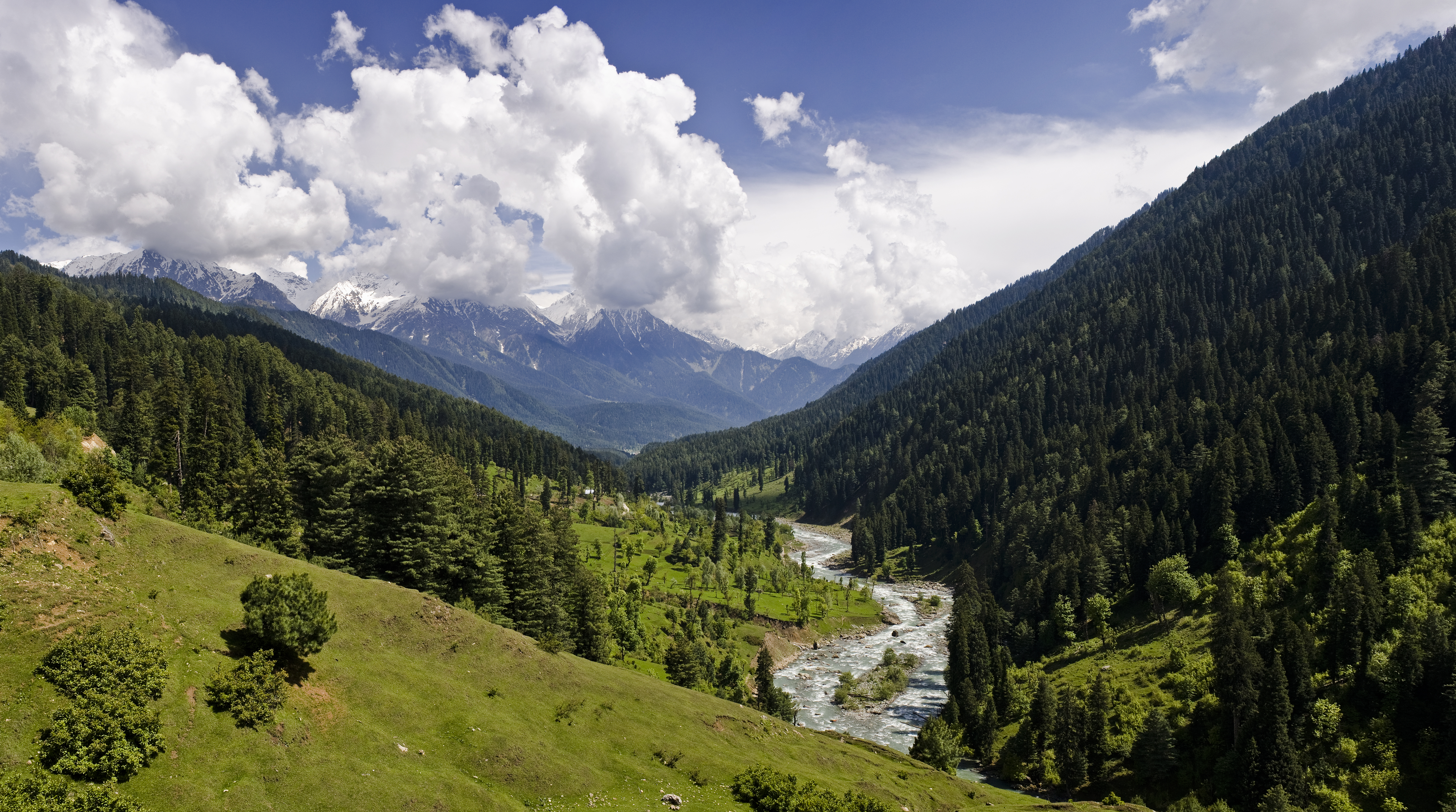
The cultural landscape of Jammu and Kashmir is a rich mosaic, deeply influenced by its history, geography, and diverse populace. The Kashmir Valley is renowned for its stunning natural beauty, often referred to as 'Paradise on Earth,' inspiring poets, artists, and writers for centuries. Traditional arts and crafts, such as Pashmina weaving, wood carving, and papier-mâché work, are integral to its cultural identity and have gained international acclaim. Sufi traditions and Islamic mysticism have a strong presence, influencing music and literature. The region's cuisine, particularly the elaborate Wazwan feast, is a celebrated aspect of its hospitality. Festivals like Eid and Maha Shivaratri are observed with great fervor, showcasing the syncretic cultural heritage. The region's distinct musical traditions, including Chakri and Rof, further contribute to its unique cultural vibrance, influencing broader Indian and South Asian artistic expressions.
⚡ Current State & Latest Developments
In the current geopolitical climate of 2024-2025, Jammu and Kashmir continues to navigate the complexities of its administrative status and the ongoing territorial dispute. Development initiatives are a key focus for the administration, with recent efforts centered on boosting tourism, particularly in areas like Pahalgam and Gulmarg, and promoting local industries. The launch of the Vande Bharat Express train service connecting Jammu and Srinagar in early 2023 marked a significant step in improving regional connectivity. Security remains a paramount concern, with intermittent reports of insurgent activity and cross-border skirmishes along the LoC. The administration is also working on enhancing digital infrastructure and promoting e-governance services across the union territory, aiming to streamline public services and foster economic growth. International attention often resurfaces regarding the region's political status and human rights situation, particularly from neighboring countries and international bodies.
🤔 Controversies & Debates
The political status of Jammu and Kashmir is one of the most enduring and contentious issues in South Asian geopolitics. The abrogation of Article 370 in 2019, which revoked the special status previously granted to the state, remains a subject of intense debate. Critics, including opposition political parties within India and the Pakistani government, argue that the move was unconstitutional and undermined the democratic rights of the Kashmiri people. Proponents, primarily the Bharatiya Janata Party (BJP)-led Indian government, assert that the decision was necessary for national integration, security, and equitable development, claiming it has curbed terrorism and corruption. The territorial claims by both India and Pakistan over the entirety of the Kashmir region, dating back to 1947, form the bedrock of this dispute, with China also asserting claims over parts of Ladakh. Insurgency and militancy, often linked to cross-border support, have been a persistent challenge, leading to significant human rights concerns and security operations by Indian forces.
🔮 Future Outlook & Predictions
The future trajectory of Jammu and Kashmir hinges on several critical factors, including the resolution of the territorial dispute with Pakistan and China, and the evolving political dynamics within India. Analysts predict a continued focus on economic development and integration with the rest of India, potentially leading to increased investment in infrastructure, tourism, and local industries. The possibility of restoring statehood, albeit with potentially altered constitutional provisions, remains a subject of speculation and political discourse. Internatio
Key Facts
- Category
- place
- Type
- topic