
Contents
- 🎵 Origins & History
- ⚙️ How It Works
- 📊 Key Facts & Numbers
- 👥 Key People & Organizations
- 🌍 Cultural Impact & Influence
- ⚡ Current State & Latest Developments
- 🤔 Controversies & Debates
- 🔮 Future Outlook & Predictions
- 💡 Practical Applications
- 📚 Related Topics & Deeper Reading
- Frequently Asked Questions
- References
- Related Topics
Overview
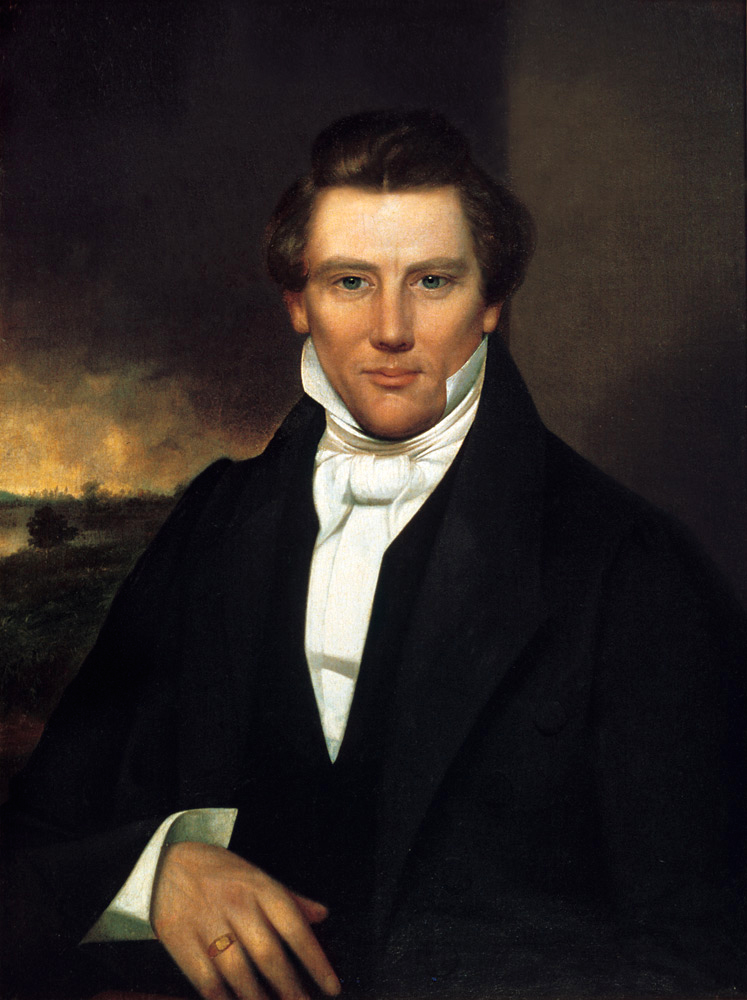
Joseph Smith Jr. (1805-1844) was an American religious leader and the founder of the Latter Day Saint movement, a faith that has since grown to millions of adherents worldwide. Emerging from the fervent religious landscape of early 19th-century Western New York, Smith reported a series of divine revelations, beginning with a vision of God the Father and Jesus Christ in 1820. These experiences culminated in his translation and publication of the Book of Mormon in 1830, which he presented as an ancient record of peoples in the Americas. Despite facing intense persecution and frequent relocations, Smith organized the church, established communities like Nauvoo, Illinois, and introduced doctrines such as plural marriage and temple ordinances. His life ended violently in 1844 when he was murdered by a mob in Carthage, Illinois, but his legacy continues through various Latter Day Saint denominations, most notably The Church of Jesus Christ of Latter-day Saints.
🎵 Origins & History
Joseph Smith Jr. was born on December 23, 1805, in Sharon, Vermont, to Joseph Smith Sr. and Lucy Mack Smith. The family relocated to Palmyra, New York, in 1816, during a period of widespread religious revivalism known as the Second Great Awakening. Amidst this spiritual fervor and family hardship, Smith reported his first major vision in 1820, seeing two divine personages. Four years later, in 1824, he claimed an angel named Moroni directed him to a hill near Palmyra where golden plates were buried, inscribed with an ancient record. Smith stated he translated these plates with divine aid, producing the Book of Mormon, which was published in 1830 by E. B. Grandin in Palmyra. This publication marked the formal beginning of the Latter Day Saint movement, with the establishment of the church on April 6, 1830, in Fayette, New York.
⚙️ How It Works
The theological framework established by Joseph Smith Jr. centers on the concept of continuing revelation and the restoration of Christ's original church. Smith taught that the Bible was the word of God as far as it was translated correctly, but that the Book of Mormon provided additional scripture and a clearer understanding of God's dealings with ancient inhabitants of the Americas. He introduced doctrines such as temple ordinances, including baptism for the dead and plural marriage (polygamy), which he claimed was a commandment from God restored through angelic ministration. Smith also organized the church with a hierarchical structure, including apostles, prophets, evangelists, pastors, teachers, and deacons, mirroring what he believed to be the early Christian church. His followers, often referred to as Mormons, were encouraged to build Zion, a righteous community, and prepare for the Second Coming of Jesus Christ.
📊 Key Facts & Numbers
By the time of his death in 1844, Joseph Smith Jr. had attracted an estimated 20,000 to 30,000 followers, a significant number for a new religious movement in the 19th century. The Book of Mormon has since been translated into over 100 languages, with over 180 million copies distributed worldwide. The Church of Jesus Christ of Latter-day Saints, the largest denomination stemming from Smith's work, reported over 17.6 million members globally as of 2023. The Joseph Smith Papers Project has digitized and published over 150,000 pages of historical documents related to Smith's life and ministry, providing invaluable primary source material for scholars. Smith himself was assassinated at the age of 38, cutting short a ministry that spanned just 14 years from the publication of the Book of Mormon.
👥 Key People & Organizations
Joseph Smith Jr.'s immediate family played a crucial role in the early Latter Day Saint movement. His father, Joseph Smith Sr., was the first patriarch of the church, and his mother, Lucy Mack Smith, meticulously documented the family's early experiences in her biography. His wife, Emma Smith, was a foundational figure, serving as the first president of the Relief Society and a key supporter, though she later had differing views on some of Smith's later doctrines. Prominent early leaders who worked closely with Smith included Sidney Rigdon, Hyrum Smith (his brother), and Brigham Young, who would later lead the majority of the movement to Utah. Organizations like the Nauvoo Legion, a militia Smith commanded, and the Council of Fifty, a political advisory group, were also central to his leadership.
🌍 Cultural Impact & Influence
The cultural impact of Joseph Smith Jr.'s movement is profound and far-reaching. The Book of Mormon has become a significant text in American literature and religious history, influencing countless narratives and theological discussions. The establishment of communities like Nauvoo, Illinois, and later Salt Lake City, Utah, demonstrated a unique model of communal organization and faith-based settlement. Smith's teachings have inspired a distinct cultural identity among Latter-day Saints, characterized by strong community ties, missionary work, and adherence to specific lifestyle codes. The movement's global expansion has introduced its unique theological perspectives and cultural practices to diverse societies worldwide, impacting everything from family structures to political discourse in regions where Latter-day Saints are prominent.
⚡ Current State & Latest Developments
In the present day, the legacy of Joseph Smith Jr. continues to be a dynamic force. The Church of Jesus Christ of Latter-day Saints remains the largest successor organization, actively engaged in global proselytizing and humanitarian efforts. Other branches, such as the Community of Christ (formerly the Reorganized Church of Jesus Christ of Latter Day Saints), continue to interpret Smith's teachings through different theological lenses. Ongoing scholarly research, facilitated by initiatives like the Joseph Smith Papers Project, continues to shed new light on his life, writings, and the historical context of the movement's origins. The church's global membership continues to grow, particularly in Latin America and Africa, ensuring the ongoing relevance and evolution of Smith's foundational work.
🤔 Controversies & Debates
Joseph Smith Jr.'s life and teachings are surrounded by significant controversies and debates. Critics question the historicity of the Book of Mormon, the divine origin of his revelations, and the ethical implications of doctrines like plural marriage. The circumstances of his death, murdered by a mob while in the custody of the governor of Illinois, remain a point of contention regarding state responsibility and religious persecution. Debates also persist regarding Smith's translation methods, the nature of his visions, and the historical accuracy of his claims about ancient American civilizations. Skeptics often point to perceived inconsistencies in his revelations and the financial motivations behind some of the church's early enterprises, while believers maintain the divine authenticity of his prophetic calling.
🔮 Future Outlook & Predictions
The future of the movement founded by Joseph Smith Jr. appears robust, driven by continued global expansion and adaptation. The Church of Jesus Christ of Latter-day Saints is projected to see sustained membership growth, particularly in developing nations, potentially shifting the demographic center of the faith. Scholars anticipate further revelations from the Joseph Smith Papers and ongoing archaeological and linguistic research that may continue to inform or challenge existing narratives. Theological discussions within and outside the church are likely to evolve, addressing contemporary social issues through the lens of Smith's foundational doctrines. The movement's ability to navigate internal theological diversity and external scrutiny will be key to its long-term trajectory.
💡 Practical Applications
The primary practical application of Joseph Smith Jr.'s work is the establishment and growth of the Latter Day Saint movement itself. This includes the organization of congregations, the operation of temples for sacred ordinances, and the extensive missionary programs that have spread the faith globally. His writings, particularly the Book of Mormon, serve as foundational texts for religious instruction and personal devotion for millions. The movement's emphasis on family history and genealogy has also led to significant advancements and public engagement with genealogical research through organizations like FamilySearch. Furthermore, the communal living principles and charitable efforts, such as those coordinated by the LDS Church's welfare system, represent practical applications of his teachings on building a righteous society.
Key Facts
- Year
- 1805-1844
- Origin
- United States
- Category
- history
- Type
- person
Frequently Asked Questions
What is Joseph Smith Jr. most famous for?
Joseph Smith Jr. is most famous for founding the Latter Day Saint movement and publishing the Book of Mormon in 1830. He claimed divine revelations that led to the establishment of a new religious tradition, which has since grown into a global faith with millions of adherents, most notably The Church of Jesus Christ of Latter-day Saints. His life was marked by both fervent devotion from followers and intense opposition from critics, culminating in his assassination at the age of 38.
When and where was Joseph Smith Jr. born?
Joseph Smith Jr. was born on December 23, 1805, in Sharon, Vermont. His family later moved to Western New York, where much of his early ministry and the foundational events of the Latter Day Saint movement took place. The family's migration was driven by economic hardship following crop failures, a common experience for many settlers in that era.
What were the key events in Joseph Smith Jr.'s life?
Key events in Joseph Smith Jr.'s life include his reported First Vision in 1820, his claim of receiving golden plates from the angel Moroni in 1823, the publication of the Book of Mormon in 1830, and the formal organization of the church on April 6, 1830. He also led his followers through periods of intense persecution and relocation, establishing communities in places like Kirtland, Ohio, Independence, Missouri, and Nauvoo, Illinois. His life concluded with his martyrdom in Carthage, Illinois, on June 27, 1844.
What are the main criticisms leveled against Joseph Smith Jr.?
Major criticisms against Joseph Smith Jr. include questions about the historicity and origins of the Book of Mormon, particularly regarding the lack of corroborating archaeological or genetic evidence for its purported ancient inhabitants. Critics also challenge the divine authenticity of his claimed revelations, the ethical implications of plural marriage which he introduced, and the financial aspects of early church operations. Skeptics often point to perceived inconsistencies in his theological pronouncements and the historical context of his claims about angelic visitations and divine mandates.
How did Joseph Smith Jr. influence modern religion?
Joseph Smith Jr. profoundly influenced modern religion by founding the Latter Day Saint movement, which has evolved into a significant global faith. His teachings introduced unique doctrines such as continuing revelation, the Book of Mormon as additional scripture, and temple ordinances like baptism for the dead. This movement has established distinct cultural practices, a strong emphasis on missionary work, and a unique theological framework that continues to attract millions of adherents worldwide, making it one of the most successful new religious movements of the 19th century.
What was Joseph Smith Jr.'s political involvement?
Joseph Smith Jr. was actively involved in politics, reflecting his belief in establishing a righteous society. He ran for President of the United States in 1844 on a platform that included abolishing slavery and establishing a theocratic government. He also served as mayor of Nauvoo, Illinois, and lieutenant general of the Nauvoo Legion, a powerful militia. His political activities, however, often exacerbated tensions with surrounding communities and contributed to the persecution he faced.
What is the significance of the Joseph Smith Papers Project?
The Joseph Smith Papers Project is a monumental academic undertaking dedicated to preserving, organizing, and publishing all of Joseph Smith Jr.'s historically significant documents. It provides scholars and the public with unprecedented access to primary source materials, including journals, revelations, letters, and legal documents. This project offers critical insights into the formation of the Latter Day Saint movement, Smith's theological development, and the historical context of his life, allowing for more informed analysis and debate.