
Contents
- 🎵 Origins & History
- ⚙️ How It Works
- 📊 Key Facts & Numbers
- 👥 Key People & Organizations
- 🌍 Cultural Impact & Influence
- ⚡ Current State & Latest Developments
- 🤔 Controversies & Debates
- 🔮 Future Outlook & Predictions
- 💡 Practical Applications
- 📚 Related Topics & Deeper Reading
- Frequently Asked Questions
- References
- Related Topics
Overview
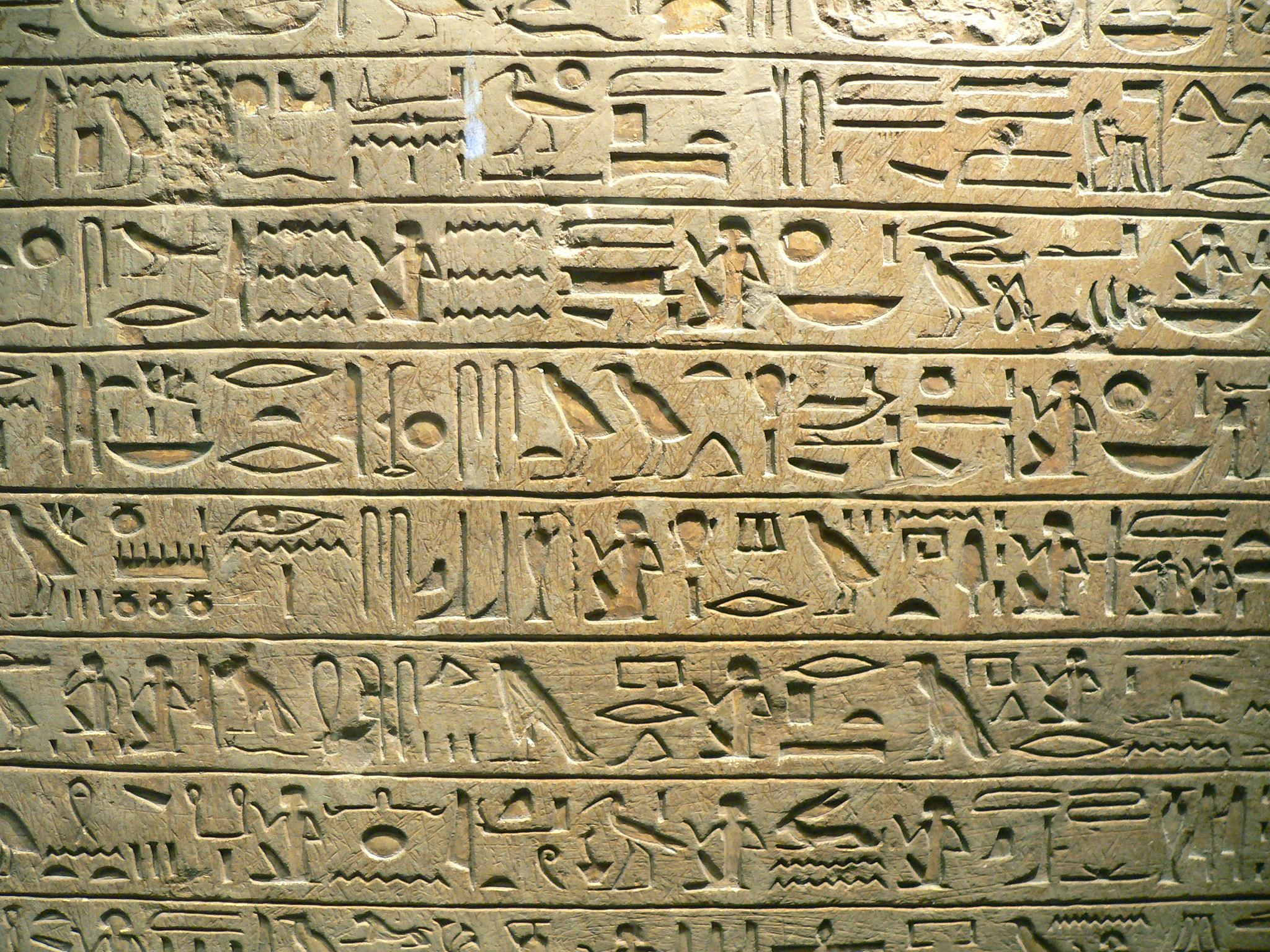
The genesis of logographic writing stretches back to the dawn of civilization, with early examples emerging independently in Mesopotamia and Egypt around the late 4th millennium BCE. Sumerian cuneiform, initially pictographic, evolved into a logographic system by representing words and concepts. Similarly, Egyptian hieroglyphs, appearing around 3200 BCE, combined logograms with phonetic signs. The development of Chinese characters, with the earliest confirmed examples dating to the Shang Dynasty oracle bone script (c. 1250 BCE), represents another major independent origin. These systems arose from the need to record complex information for administration, religion, and trade, moving beyond simple mnemonic devices to structured linguistic representation. The sheer antiquity and independent development of these systems underscore a fundamental human drive to codify language visually.
⚙️ How It Works
At its core, logographic writing functions by assigning a unique symbol to a specific word or meaningful unit (morpheme). For instance, in Chinese, the character '山' (shān) directly represents the concept of 'mountain'. However, pure logography is rare; most systems incorporate phonetic elements to expand vocabulary and disambiguate meanings. This is often achieved through the rebus principle, where a symbol representing a word with a similar sound is used to represent another word. For example, an image of an 'eye' might represent the word 'I'. Furthermore, many logographic scripts, like Chinese, employ semantic-phonetic compounds, where one part of a character suggests meaning and another suggests pronunciation, creating a sophisticated hybrid system that encodes both semantics and phonetics.
📊 Key Facts & Numbers
The scale of logographic systems is often staggering. Classical Egyptian hieroglyphs comprised around 700 distinct signs, while later periods saw this number swell to over 6,000. The cuneiform script, used for multiple languages like Sumerian and Akkadian, had a vocabulary of thousands of signs. Modern Chinese dictionaries list tens of thousands of characters, though active use typically involves 3,000-5,000. The sheer volume of unique logograms required for comprehensive representation is a defining characteristic, contrasting sharply with alphabetic systems that use a few dozen symbols to represent all sounds. The learning curve for mastering a logographic script is thus significantly steeper, demanding extensive memorization.
👥 Key People & Organizations
While no single individual 'invented' logography, key figures and institutions are associated with its development and preservation. The scribes of ancient Mesopotamia and Ancient Egypt were the primary custodians and developers of cuneiform and hieroglyphs, respectively. In China, scholars and calligraphers throughout dynasties, such as Wang Xizhi (4th century CE), refined the aesthetic and structural principles of Chinese characters. Institutions like the Imperial Academy of Han Dynasty played crucial roles in standardizing scripts. Modern linguistic research by scholars like John De Francis has critically analyzed the nature and evolution of logographic systems, often challenging Western-centric views of writing.
🌍 Cultural Impact & Influence
Logographic systems have profoundly shaped the cultural and intellectual landscapes of the civilizations that employ them. Chinese characters, for instance, have served as a unifying force across diverse Chinese dialects and influenced writing systems in Japan (kanji), Korea (hanja), and Vietnam (chữ Nôm). The aesthetic beauty of calligraphy in East Asia, particularly Chinese calligraphy, is a major art form in itself. Egyptian hieroglyphs, though no longer in daily use, remain a potent symbol of ancient Egyptian civilization, inspiring art, literature, and popular culture. The enduring presence of these scripts for millennia testifies to their deep cultural resonance and adaptability.
⚡ Current State & Latest Developments
Despite the global dominance of alphabetic scripts, logographic elements persist and even evolve. Chinese characters continue to be the primary writing system for over a billion people, with ongoing efforts to simplify and standardize them, such as the Simplified Chinese characters introduced in the mid-20th century. Digital input methods for logographic scripts have seen significant innovation, with sophisticated character recognition and prediction algorithms developed by companies like Google and Microsoft. The study of historical logographic scripts also continues, with ongoing decipherment efforts and new archaeological discoveries shedding light on their ancient origins and evolution.
🤔 Controversies & Debates
The primary controversy surrounding logographic systems centers on their perceived inefficiency and difficulty compared to alphabetic scripts. Critics, particularly from Western linguistic traditions, have historically viewed them as cumbersome and an impediment to literacy. The debate over whether Chinese characters are purely logographic or possess significant phonetic components has been ongoing, with linguists like Yuen Ren Chao highlighting the substantial phonetic elements. Another point of contention is the potential for ambiguity; while logograms can convey meaning directly, their interpretation can sometimes depend heavily on context, leading to potential misunderstandings. The sheer number of characters required for full literacy also presents a significant educational challenge.
🔮 Future Outlook & Predictions
The future of logographic writing is likely to be one of continued adaptation and coexistence with phonetic systems. As digital technologies advance, the efficiency of inputting and processing logographic characters will improve, potentially mitigating some of the perceived disadvantages. There's also a growing appreciation for the cultural and aesthetic value of logograms, which may ensure their longevity. However, the global trend towards alphabetic literacy and the ease of digital communication in phonetic scripts suggest that logographic systems might see a gradual decline in certain domains, particularly in international communication. The question remains whether hybrid systems or entirely new forms of writing will emerge to bridge the gap between visual meaning and phonetic representation.
💡 Practical Applications
Logographic systems find practical application primarily in the written languages that employ them, most notably Mandarin Chinese and other Sinitic languages. Beyond everyday communication, logograms are used in specialized contexts: Japanese Kanji are integral to the Japanese language, and Chinese characters are still used in seals, artistic designs, and as mnemonic devices. In historical contexts, deciphering Egyptian hieroglyphs and cuneiform has unlocked vast amounts of information about ancient civilizations. The principles of logographic representation also inform aspects of modern design and iconography, where symbols are used for quick recognition, such as traffic signs or emoji.
Key Facts
- Year
- c. 4th millennium BCE
- Origin
- Mesopotamia, Egypt, China (independent origins)
- Category
- linguistics
- Type
- concept
Frequently Asked Questions
What is the fundamental difference between logographic and alphabetic writing?
The core distinction lies in what the symbols represent. Alphabetic systems, like the Latin alphabet used for English, use symbols (letters) to represent individual sounds (phonemes). Logographic systems, such as Chinese characters, use symbols (logograms) to represent entire words, morphemes, or semantic units. This means an alphabet can express any word with a relatively small set of symbols (typically 20-40), whereas a logographic system requires a vast inventory of unique symbols, often numbering in the thousands, to cover a language's vocabulary comprehensively.
Are logograms purely pictographic, meaning they look like what they represent?
Not necessarily. While early logograms often originated as pictograms (e.g., a drawing of a mountain for 'mountain'), most evolved significantly over time. Many logograms become abstract or stylized, losing their direct visual resemblance to the object or concept they represent. Furthermore, a significant portion of logograms function through the rebus principle, where a symbol represents a word based on sound rather than appearance. For example, a symbol for 'eye' might be used to represent the word 'I'.
How do people learn to read and write in a logographic system like Chinese?
Learning a logographic system demands extensive memorization. Readers must learn thousands of individual characters, each with its own pronunciation and meaning. While many characters are compounds that offer clues to pronunciation and meaning (semantic-phonetic compounds), the sheer volume requires dedicated study over many years. Calligraphy and repeated writing are often employed as pedagogical tools to reinforce character recognition and recall. This contrasts with alphabetic systems, where learning the sound-symbol correspondences allows one to decode unfamiliar words.
Why did logographic systems persist for so long if they are so complex?
Logographic systems persisted due to their deep cultural integration and unique advantages. In regions like East Asia, characters served as a lingua franca across diverse spoken dialects, providing a unifying written medium for centuries. They also possess a certain aesthetic and mnemonic power, allowing for concise expression and rich artistic traditions like calligraphy. Furthermore, the semantic component of logograms can sometimes aid comprehension, especially in contexts where pronunciation might be ambiguous or vary significantly between dialects. The historical inertia and cultural significance of these scripts made them incredibly resilient.
Can logographic systems be considered 'ideographic' or purely based on ideas?
The term 'ideographic' is often used loosely, but linguistically, pure ideography (symbols representing abstract ideas directly) is rare. Most logographic systems are better described as 'logographic' because their symbols primarily represent words or morphemes. While many logograms do convey meaning directly, they are tied to specific linguistic units. As mentioned, the rebus principle and semantic-phonetic compounds demonstrate that phonetic elements are crucial. Therefore, it's more accurate to say logograms represent linguistic units, which may originate from pictographic or ideographic concepts but are integrated into a spoken language's structure.
What are the practical challenges of using logograms in a digital age?
The primary digital challenge for logograms is inputting them. Unlike typing an alphabet, entering thousands of unique characters requires specialized input methods. Early methods involved complex character decomposition or selection from vast grids. Modern systems use sophisticated predictive text algorithms, AI-powered character recognition (e.g., handwriting recognition), and phonetic input (like Pinyin for Chinese) to streamline the process. However, the sheer number of characters still presents a hurdle for efficient digital communication compared to typing in alphabetic languages, though significant progress has been made by companies like Google and Microsoft.
What is the future outlook for logographic writing systems?
Logographic systems are expected to endure, particularly in East Asia, due to their profound cultural significance and the ongoing development of digital technologies that facilitate their use. While alphabetic systems dominate global communication, logograms will likely continue to evolve, perhaps with further simplification or standardization. There's also a growing academic and popular interest in the historical and aesthetic aspects of these ancient scripts. However, the inherent complexity may lead to a continued preference for alphabetic systems in new domains or international contexts, suggesting a future of coexistence rather than complete replacement.