
Contents
Overview
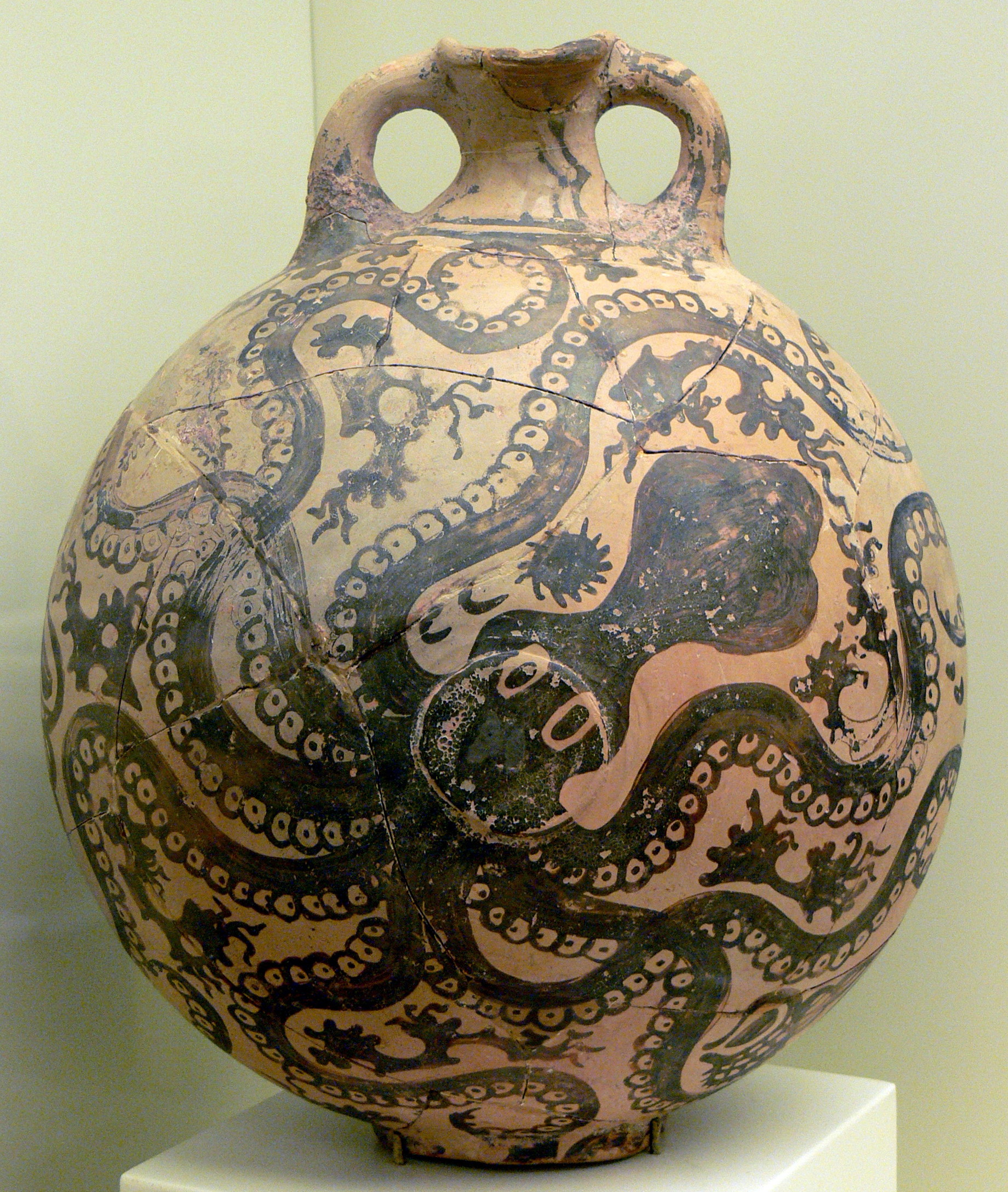
The Minoan civilization, flourishing on the island of Crete from approximately 2600 to 1100 BC, is celebrated for its richly decorated pottery, which includes a variety of forms such as vases, figurines, models of buildings, and burial urns known as Larnakes. The development of Minoan pottery is closely tied to the architectural and artistic innovations of the time, particularly the construction of the grand Minoan palaces like Knossos Palace. The restless sequence of artistic styles in Minoan pottery, from the early Early Minoan simplicity to the later Late Minoan complexity, reflects the Minoans' pleasure in novelty and assists archaeologists in assigning relative dates to the strata of their sites.
⚙️ Techniques and Styles
The techniques used in Minoan pottery were advanced for their time, with the finest achievements coming in the Middle Minoan period with the palace pottery known as Kamares ware, and the Late Minoan all-over patterned Marine Style and Floral Style. These styles were not only admired locally but also widely exported, found in sites across the Aegean islands, mainland Greece, Cyprus, along coastal Syria, and in Egypt. The presence of Minoan pottery in these regions underscores the civilization's significant role in the ancient Mediterranean trade, with trade networks that stretched far beyond Crete.
🌍 Trade and Cultural Impact
The influence of Minoan pottery can be seen in the work of other ancient civilizations, such as the Mycenaeans, who adopted and adapted Minoan styles in their own pottery. This cross-cultural exchange is a testament to the artistic and economic connections that existed between these ancient societies. Moreover, the study of Minoan pottery has been instrumental in understanding the chronology and cultural dynamics of the Eastern Mediterranean during the Bronze Age, with scholars like Arthur Evans contributing significantly to our knowledge of Minoan civilization through their excavations at Knossos.
🔮 Legacy and Preservation
Today, Minoan pottery is not only valued for its historical significance but also admired for its aesthetic appeal, with many pieces on display in museums such as the Heraklion Museum in Crete and the British Museum in London. The preservation and study of Minoan pottery continue to be important areas of research, offering insights into the technological, artistic, and cultural achievements of the Minoan civilization. As such, Minoan pottery remains an enduring symbol of the creativity and sophistication of one of the earliest and most influential civilizations of the ancient world.
Key Facts
- Year
- 2600 BC - 1100 BC
- Origin
- Crete, Greece
- Category
- history
- Type
- concept
Frequently Asked Questions
What are the distinctive features of Minoan pottery?
Minoan pottery is known for its diverse and intricately decorated styles, including the use of naturalistic motifs such as marine and floral themes. The pottery often features a range of colors, including red, black, and white, applied in various techniques to create complex designs.
How did Minoan pottery influence other ancient civilizations?
Minoan pottery had a significant influence on the pottery of other ancient civilizations, such as the Mycenaeans, who adopted and adapted Minoan styles in their own work. This influence can be seen in the spread of Minoan motifs and techniques across the Eastern Mediterranean.
What is the significance of Minoan pottery in understanding the chronology of the Minoan civilization?
Minoan pottery is crucial for understanding the chronology of the Minoan civilization because its styles and techniques changed over time, allowing archaeologists to date the strata of Minoan sites. The development of Minoan pottery reflects the cultural, artistic, and economic evolution of the Minoan civilization.
Where can examples of Minoan pottery be found today?
Examples of Minoan pottery can be found in museums such as the Heraklion Museum in Crete and the British Museum in London. Many pieces are also preserved in archaeological sites across Crete and other parts of the Aegean.
How has the study of Minoan pottery contributed to our understanding of ancient trade networks?
The study of Minoan pottery has provided significant insights into the trade networks of the ancient Eastern Mediterranean. The wide distribution of Minoan pottery across the region indicates extensive trade contacts between the Minoans and other civilizations, such as the Egyptians and the Mycenaeans.