Contents
Overview
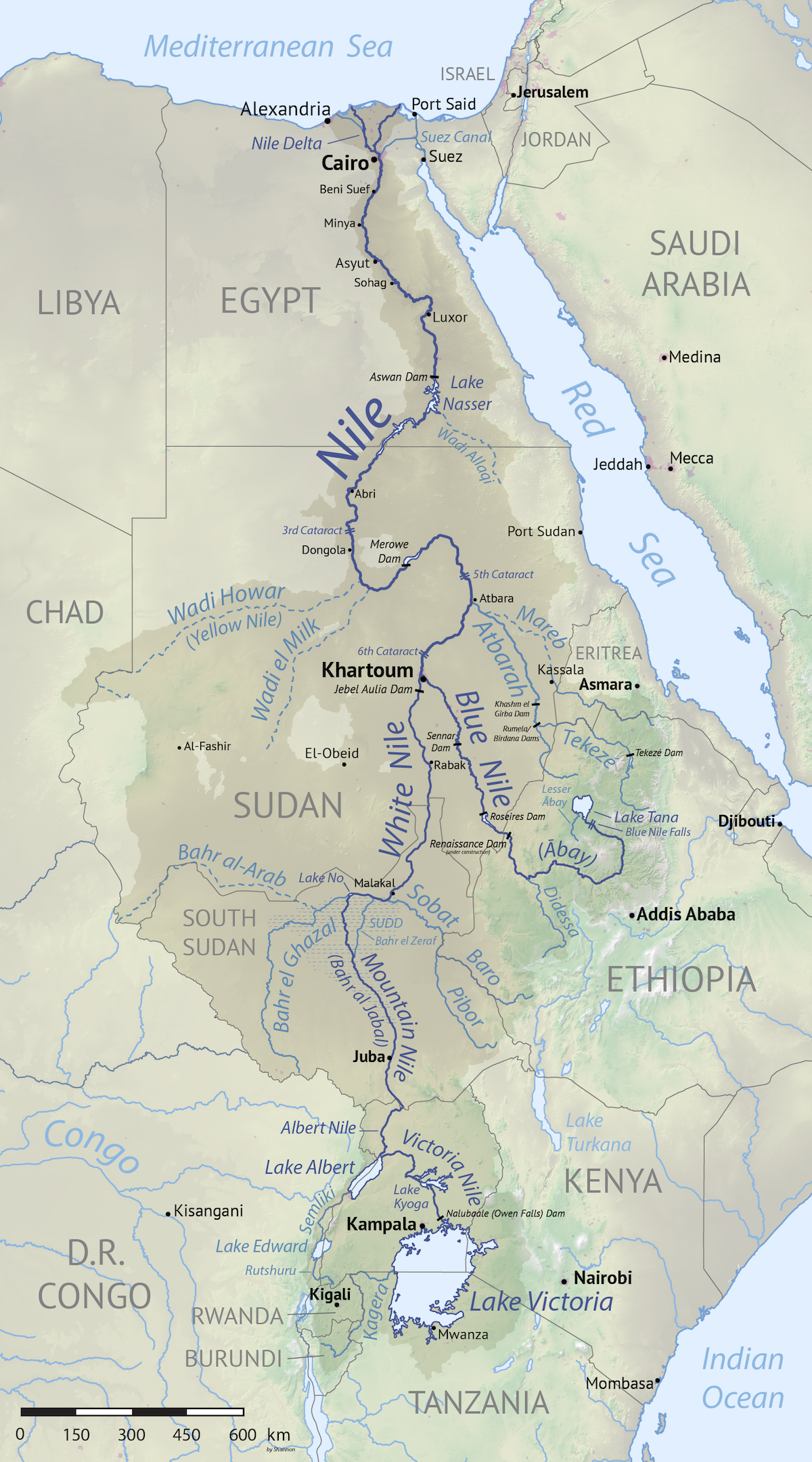
The story of the Nile Basin is as old as human civilization itself, with its origins deeply rooted in the ancient landscapes of East Africa. While the river's primary sources are often traced to the Great Lakes region, particularly Lake Victoria (the source of the White Nile) and Lake Tana (the source of the Blue Nile), the basin's geopolitical significance solidified over millennia. Ancient Egyptian civilization flourished due to the annual inundation of the Nile, a phenomenon meticulously observed and harnessed by rulers like Pharaoh Akhenaten. The basin's modern delineation and the recognition of its shared resources gained momentum in the 20th century, culminating in the formation of the Nile Basin Initiative (NBI) in 1999, an intergovernmental partnership aimed at promoting sustainable management and equitable use of the common Nile Basin water resources among its member states.
⚙️ How It Works
The Nile River system functions as a colossal natural water conduit, collecting precipitation and runoff from a diverse range of elevations and climates across eleven nations. The White Nile provides a more consistent flow throughout the year, while the Blue Nile, originating in the Ethiopian highlands, contributes the majority of the water and silt, especially during the rainy season. These two major tributaries converge at Khartoum, Sudan, forming the main Nile, which then flows northward through the Sahara Desert to its delta in the Mediterranean Sea. The basin's hydrological dynamics are influenced by complex rainfall patterns, evaporation rates in arid zones, and the intricate network of tributaries like the Atbara River and the Kagera River. Understanding these flows is crucial for water management, agriculture, and hydropower generation across the region.
📊 Key Facts & Numbers
The Nile Basin is a powerhouse of human and natural resources. This vast area supports a population of over 270 million people, roughly 20% of Africa's total population. The basin is the primary water source for at least four countries, with Egypt and Sudan relying on it for over 95% of their freshwater needs. Hydropower generation from the Nile and its tributaries is substantial, with major dams like the Aswan High Dam in Egypt and the Grand Ethiopian Renaissance Dam (GERD) in Ethiopia playing critical roles in national energy grids, contributing gigawatts of electricity. The basin also supports significant agricultural output, with irrigation systems drawing from the river sustaining millions of livelihoods.
👥 Key People & Organizations
The Nile Basin is shaped by a constellation of nations and organizations, each with vested interests in its waters. Key countries include Egypt, Sudan, Ethiopia, Uganda, Tanzania, Kenya, Rwanda, Burundi, Democratic Republic of the Congo, South Sudan, and Eritrea. The Nile Basin Initiative (NBI) serves as the primary intergovernmental platform for cooperation, established in 1999. Within these nations, ministries of water and irrigation, such as Egypt's Ministry of Water Resources and Irrigation and Ethiopia's Ministry of Water and Energy, are central to policy-making. Influential figures often emerge from these governmental bodies or from academic institutions focused on hydrology and international water law, such as the University of Khartoum or the American University in Cairo.
🌍 Cultural Impact & Influence
The cultural resonance of the Nile Basin is profound, deeply interwoven with the fabric of human history and societal development. For millennia, the Nile has been revered as a life-giving deity in ancient Egyptian religion, its annual floods dictating agricultural cycles and religious festivals. Beyond Egypt, the river and its tributaries have shaped the cultures, economies, and political landscapes of all basin countries. The shared reliance on the Nile has fostered both cooperation and conflict, influencing diplomatic relations and regional stability. Modern cultural expressions, from literature and film to music and art, frequently draw inspiration from the river's power, its arid surroundings, and the diverse peoples who call the basin home, reflecting themes of survival, heritage, and interconnectedness.
⚡ Current State & Latest Developments
The current state of the Nile Basin is characterized by a dynamic interplay of development, environmental pressures, and ongoing diplomatic negotiations. The Grand Ethiopian Renaissance Dam (GERD) remains a focal point, with Ethiopia pushing forward with its filling and operation, while downstream countries, particularly Egypt and Sudan, express concerns over water security. The Nile Basin Initiative (NBI) continues its efforts to facilitate dialogue, though consensus on critical issues like dam operation rules remains elusive. Climate change is also an increasing concern, potentially altering rainfall patterns and exacerbating water scarcity in already arid regions. Meanwhile, investments in hydropower, irrigation, and infrastructure projects continue across the basin, driven by growing populations and economic aspirations.
🤔 Controversies & Debates
The Nile Basin is a hotbed of controversy, primarily centered on water resource allocation and the development of large-scale infrastructure projects. The most prominent debate revolves around the Grand Ethiopian Renaissance Dam (GERD). Ethiopia views the dam as essential for its economic development and energy security, while Egypt and Sudan fear that the dam's operation, particularly during dry years, could significantly reduce the water flow reaching their territories, jeopardizing their agricultural sectors and water supplies. Negotiations under the auspices of the Nile Basin Initiative (NBI) have struggled to produce a binding agreement on the dam's filling and operational guidelines, leading to persistent geopolitical tensions and accusations of unilateral action. Other debates concern transboundary pollution, ecosystem health, and the equitable distribution of benefits from shared water resources.
🔮 Future Outlook & Predictions
The future outlook for the Nile Basin is a complex tapestry of potential cooperation and escalating conflict, heavily influenced by demographic growth, climate change, and geopolitical maneuvering. Projections suggest that the basin's population will continue to rise significantly, increasing demand for water for agriculture, industry, and domestic use. Climate change models predict more erratic rainfall patterns, potentially leading to both more intense floods and prolonged droughts, further straining water resources. The success of the Nile Basin Initiative (NBI) in brokering a comprehensive and equitable agreement on water sharing, particularly concerning the Grand Ethiopian Renaissance Dam (GERD), will be a critical determinant of regional stability. Without a robust framework for cooperation, the risk of water-related disputes escalating into more serious geopolitical confrontations remains a significant concern for the coming decades.
💡 Practical Applications
The practical applications of the Nile Basin's resources are fundamental to the survival and development of its riparian states. Hydropower generation is a primary application, with dams like the Aswan High Dam and the Grand Ethiopian Renaissance Dam (GERD) providing electricity for millions, powering industries and households. Agriculture is heavily reliant on the Nile's waters for irrigation; vast tracts of land in Egypt and Sudan are cultivated using water drawn directly from the river or through extensive canal systems, supporting staple food production. Navigation, though limit
Key Facts
- Category
- geography
- Type
- topic