
Contents
Overview
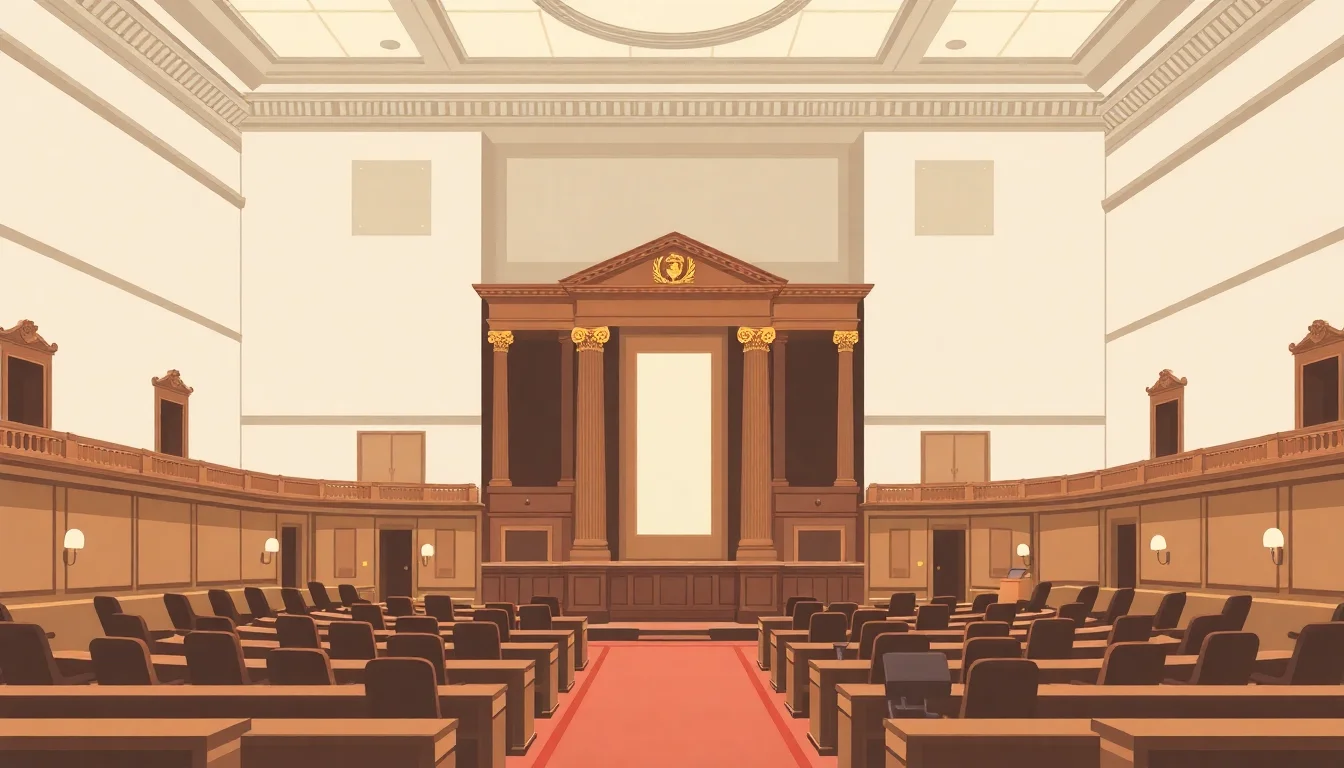
Parliamentary chambers are the physical spaces and institutional structures where legislative bodies convene to conduct public business. These spaces range from grand, historic halls to modern, functional rooms, each designed to facilitate debate, deliberation, and voting. The design and layout of these chambers often reflect a nation's political culture, historical evolution, and the desired balance of power between different branches of government. Beyond their architectural significance, parliamentary chambers are potent symbols of democracy, representing the collective will of the people and serving as the crucible for policy-making. Their arrangement, from the horseshoe seating of the House of Commons to the semi-circular setup of the Bundestag, influences the dynamics of debate and the nature of political interaction, impacting everything from oratory style to the ease of forming consensus. The very existence and structure of these chambers are often subjects of intense political debate, particularly concerning bicameral versus unicameral systems and the representation of diverse interests within a nation.
🎵 Origins & History
The concept of a dedicated space for public deliberation and lawmaking stretches back to antiquity, with precursors like the Roman Senate and the Athenian Ecclesia. However, the modern parliamentary chamber largely evolved from medieval council rooms and ecclesiastical settings, particularly in Europe. The House of Lords in the United Kingdom, with its origins in the King's Council, and the House of Commons, which emerged from representatives of shires and boroughs, laid foundational models. The adversarial model of the UK House of Commons has been emulated, adapted, or rejected by countless legislative bodies worldwide, from the French National Assembly to the Canadian Parliament. The physical arrangement is not merely aesthetic; it's a deliberate engineering of political interaction, shaping the very nature of legislative discourse and power dynamics across centuries.
⚙️ How It Works
Parliamentary chambers function as the physical stage for the legislative process. Members of Parliament (MPs) or their equivalents gather within these spaces to debate proposed legislation, scrutinize government actions, and vote on critical issues. The seating arrangement is paramount: in adversarial systems like the UK House of Commons, members of the governing party sit on one side, and the opposition on the other, often in a rectangular or horseshoe configuration, encouraging direct confrontation. In consensus-oriented systems, such as those found in Nordic countries, semi-circular or U-shaped seating arrangements are more common, promoting cross-party dialogue. Voting typically occurs through voice votes, division bells that summon members to physically cross the floor or enter lobbies, or electronic systems. The chamber also houses essential parliamentary staff, including clerks who manage proceedings, and is equipped with technology for broadcasting debates and facilitating communication, all orchestrated to ensure the orderly conduct of democratic governance.
📊 Key Facts & Numbers
The vast majority of national parliaments employ either unicameral (one chamber) or bicameral (two chambers) systems. The cost of maintaining these legislative bodies, including the upkeep of their chambers, can run into billions of dollars annually for larger nations.
👥 Key People & Organizations
Key figures in the evolution of parliamentary chambers include political theorists who advocated for specific legislative structures. Organizations such as the Inter-Parliamentary Union (IPU) play a crucial role in promoting parliamentary democracy globally, often advising on chamber design and parliamentary procedure. Historical figures like Simón Bolívar proposed ambitious tricameral models for nascent South American republics, though few endured. More recently, debates around chamber reform in countries like Japan, aiming to modernize aging parliamentary buildings such as the National Diet Building, involve contemporary architects and urban planners. The Parliamentary Assembly of the Council of Europe also serves as a significant international forum where parliamentary practices are discussed and shared.
🌍 Cultural Impact & Influence
Parliamentary chambers are more than just buildings; they are potent symbols of national identity and democratic aspiration. The grandeur of the Indian Parliament or the solemnity of the Bundestag in Berlin evokes a sense of national pride and the weight of governance. The visual representation of these chambers in media, from news broadcasts to films, reinforces their symbolic importance. The adversarial nature of chambers like the UK House of Commons has influenced political rhetoric and media coverage, often prioritizing conflict over consensus. Conversely, the more collaborative seating in chambers like the New Zealand Parliament can foster a different public perception of political interaction. The very act of broadcasting parliamentary proceedings from these chambers has democratized access to political discourse, allowing citizens to witness their representatives at work, thereby shaping public understanding and engagement with the political process.
⚡ Current State & Latest Developments
Current developments in parliamentary chambers often focus on modernization and accessibility. Many legislatures are undertaking renovations to incorporate advanced audiovisual technology for broadcasting and voting, as seen in the ongoing upgrades to the Canadian Parliament buildings. There's a growing emphasis on making chambers more accessible to people with disabilities, including improved ramps, seating, and assistive listening devices. In response to security concerns, particularly following events like the January 6th attack on the US Capitol, many parliamentary buildings are implementing enhanced security measures. Furthermore, debates continue in various countries about the optimal seating arrangements and chamber designs to foster either more adversarial or more collaborative legislative environments, reflecting evolving political philosophies and societal needs. The Japanese Parliament is also planning significant renovations to its 90-year-old building.
🤔 Controversies & Debates
The primary controversy surrounding parliamentary chambers revolves around their design and its impact on legislative behavior. The adversarial, two-party system model, exemplified by the UK House of Commons, is criticized for fostering unproductive partisanship and gridlock, while consensus-oriented designs are sometimes seen as diluting clear political accountability. The debate over bicameralism versus unicameralism is perennial; proponents of bicameral systems argue for checks and balances and more thorough review, while unicameralists champion efficiency and reduced cost. Historical examples of tricameralism, such as the apartheid-era South African Parliament, are universally condemned as instruments of division and inequality. The physical security of these spaces also remains a contentious issue, with ongoing debates about balancing openness with the need to protect lawmakers and the democratic process.
🔮 Future Outlook & Predictions
The future of parliamentary chambers will likely be shaped by technological integration and evolving democratic norms. We can expect increased use of digital tools for debate, voting, and citizen engagement, potentially altering the physical layout and function of chambers. Virtual or hybrid parliamentary sessions, accelerated by the COVID-19 pandemic, may become more commonplace, challenging the traditional reliance on
Key Facts
- Category
- politics
- Type
- topic