
Contents
- 🎵 Origins & History
- ⚙️ How It Works
- 📊 Key Facts & Numbers
- 👥 Key People & Organizations
- 🌍 Cultural Impact & Influence
- ⚡ Current State & Latest Developments
- 🤔 Controversies & Debates
- 🔮 Future Outlook & Predictions
- 💡 Practical Applications
- 📚 Related Topics & Deeper Reading
- Frequently Asked Questions
- References
- Related Topics
Overview
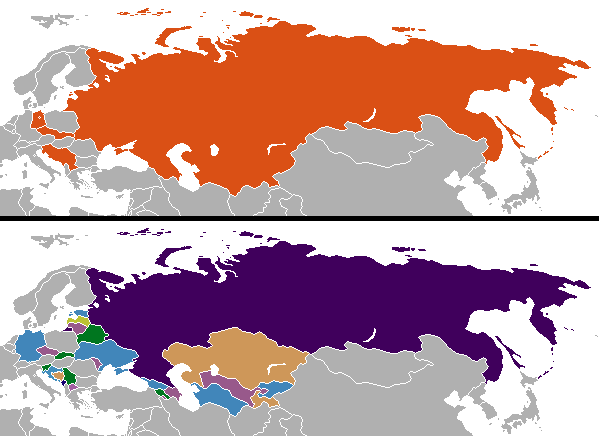
The post-Cold War security order officially began with the dissolution of the Soviet Union in December 1991, marking the definitive end of the bipolar world order that had defined international relations for nearly five decades. The preceding years, however, saw the cracks widening, with the fall of the Berlin Wall in 1989 and the subsequent revolutions across Eastern Europe signaling the imminent collapse of Soviet influence. This period was heralded by thinkers like Francis Fukuyama, who famously posited the 'end of history' in his 1989 essay, suggesting the universal triumph of Western liberal democracy and market capitalism. The initial years saw a surge in optimism, with widespread disarmament treaties and the expansion of democratic governance, particularly in Eastern Europe, as nations shed Soviet-imposed regimes. The United Nations also experienced a period of renewed relevance, authorizing interventions in conflicts like the First Gulf War (1990-1991) and the Bosnian War (1992-1995).
⚙️ How It Works
The post-Cold War security order operated primarily on a unipolar framework, with the United States wielding unparalleled military, economic, and diplomatic power. This dominance allowed for the promotion of a specific set of norms and institutions, often referred to as the 'liberal international order.' Key mechanisms included the expansion of North Atlantic Treaty Organization eastward, the establishment of the World Trade Organization (WTO) in 1995 to govern global trade, and the increasing reliance on international law and multilateral institutions. The concept of 'humanitarian intervention' gained traction, leading to interventions in Kosovo (1999) and Libya (2011), though often without explicit UN Security Council mandates. Economic globalization, facilitated by Bretton Woods institutions like the IMF and World Bank, became a central pillar, with the expectation that economic interdependence would foster peace. The rise of non-state actors, including transnational terrorist groups like Al-Qaeda, also became a defining feature, challenging state-centric security paradigms.
📊 Key Facts & Numbers
The post-Cold War era witnessed a dramatic reduction in global military spending relative to GDP for much of the 1990s and early 2000s. For instance, U.S. military spending fell by over 30% between 1990 and 1998. Nuclear arsenals also shrank significantly; by 2000, the U.S. and Russia had reduced their deployed strategic warheads by approximately 80% from their Cold War peaks. The number of democracies worldwide surged, with Freedom House reporting a steady increase from around 75 countries in 1990 to over 120 by the mid-2000s. However, the economic disparities persisted and, in some cases, widened. By 2019, the top 1% of the global population held 45% of the world's wealth, according to Credit Suisse reports. The number of active armed conflicts, while decreasing in the 1990s, began to tick upwards again in the 2010s, reaching over 50 major conflicts by 2020, according to the Uppsala Conflict Data Program.
👥 Key People & Organizations
Key figures who shaped the post-Cold War security order include George H.W. Bush, who navigated the final years of the Cold War and the initial phase of the unipolar moment, emphasizing a 'new world order.' Bill Clinton's presidency saw the expansion of NATO and significant engagement in the Balkans. Tony Blair was a prominent advocate for 'liberal interventionism,' particularly following the 9/11 attacks. Vladimir Putin's rise to power in Russia marked a turning point, signaling a challenge to U.S. hegemony and a resurgence of Russian assertiveness. Major organizations like NATO, the European Union, and the United Nations played pivotal roles in shaping the institutional architecture. The Brookings Institution and the Council on Foreign Relations were influential think tanks shaping policy discourse.
🌍 Cultural Impact & Influence
Culturally, the post-Cold War era was marked by a sense of triumphalism in the West, often termed the 'end of history' narrative, which celebrated the perceived victory of liberal democracy and market economics. This was reflected in popular culture, with films and literature exploring themes of globalization, interconnectedness, and the challenges of a world without clear ideological adversaries, though often still grappling with the legacy of terrorism and ethnic conflict. The rise of the internet and social media platforms like Facebook and Twitter fundamentally altered how information was disseminated and how political movements mobilized, enabling both greater global connectivity and the rapid spread of disinformation. The concept of 'soft power,' as articulated by Joseph Nye, became increasingly important, with cultural exports and values playing a significant role in international influence, though this was increasingly contested by states promoting alternative models.
⚡ Current State & Latest Developments
The post-Cold War security order is currently in a state of significant flux and fragmentation. The rise of China as a global economic and military power has challenged the unipolar moment, leading to renewed great power competition with the United States. Russia's invasion of Ukraine in 2022 shattered the post-Cold War peace in Europe and triggered a significant realignment of global alliances and security architectures, including a renewed focus on collective security within NATO. Transnational threats, such as climate change, pandemics (like the COVID-19 pandemic), and cyber warfare, continue to pose complex challenges that transcend traditional state-based security frameworks. The effectiveness of multilateral institutions like the UN Security Council is increasingly questioned due to great power rivalries and veto powers, leading to a more multipolar and unpredictable international environment.
🤔 Controversies & Debates
The post-Cold War security order is rife with controversy, primarily centered on the sustainability and desirability of the U.S.-led liberal international order. Critics argue that the unipolar moment led to American unilateralism, costly interventions (e.g., the Iraq War in 2003), and the neglect of domestic issues. The eastward expansion of NATO is a persistent point of contention, with Russia viewing it as a direct threat to its security interests, a claim disputed by NATO members who emphasize its defensive nature. The efficacy and legitimacy of 'humanitarian interventions' remain debated, with accusations of selectivity and neo-imperialism. Furthermore, the rise of populism and nationalism in various countries, including the United States and parts of Europe, signals a rejection of globalist ideals and a questioning of the very foundations of the post-Cold War order. The debate over whether the order is collapsing, transforming, or being replaced by a new system is ongoing.
🔮 Future Outlook & Predictions
The future of the post-Cold War security order is highly uncertain, with several competing visions emerging. One trajectory points towards a more multipolar world, characterized by regional blocs and increased competition between major powers like the United States, China, and Russia. Another possibility is a 'fragmented order,' where international cooperation breaks down further, leading to increased instability and conflict. Some analysts predict a resurgence of great power rivalry reminiscent of the pre-World War I era, while others foresee a potential for renewed multilateralism, driven by shared threats like climate change and pandemics, forcing greater cooperation. The role of emerging technologies, such as artificial intelligence and cyber warfare, will undoubtedly shape future security dynamics, potentially creating new domains of conflict and cooperation. The next decade will likely see a decisive shift away from the unipolar assumptions of the early post-Cold War period.
💡 Practical Applications
The principles and institutions established during the post-Cold War era have had profound practical applications, shaping global governance and interstate relations. The expansion of NATO has provided a security framework for many Eastern European nations, influencing their defense policies and military modernization. The promotion of free trade agreements, such as NAFTA (now USMCA), has reshaped global supply chains and economic interdependence. International efforts to combat terrorism, particularly after 9/11, led to enhanced intelligence sharing, counter-terrorism legislation, and military operations in regions like Afghanistan and Iraq. The development of international criminal law, with the establishment of tribunals like the International Criminal Court (ICC), represents an attempt to hold individuals accountable for war crimes and crimes against humanity, though its effectiveness remains debated. The ongoing efforts to manage nuclear proliferation through bodies like the IAEA are direct applications of the security architecture established in this period.
Key Facts
- Year
- 1991-present
- Origin
- Global
- Category
- history
- Type
- concept
Frequently Asked Questions
What was the 'end of history' theory in the post-Cold War era?
The 'end of history' theory, popularized by Francis Fukuyama in 1989, posited that the collapse of communism and the triumph of liberal democracy and market economics represented the culmination of humanity's ideological evolution. It suggested that Western liberal democracy would become the final form of human government, leading to a period of relative global stability and the absence of major ideological conflict. This idea profoundly influenced the initial optimism surrounding the post-Cold War security order, though it has since been challenged by resurgent authoritarianism and geopolitical competition.
How did the post-Cold War era differ from the Cold War?
The primary difference was the shift from a bipolar world, dominated by two superpowers (USA and USSR), to a unipolar world, with the U.S. as the sole superpower. This led to a reduction in ideological confrontation, a decrease in the threat of global nuclear war, and a greater emphasis on issues like economic globalization, humanitarian intervention, and the spread of democracy. While the Cold War was characterized by proxy wars and a rigid ideological divide, the post-Cold War era saw more fluid alliances, complex transnational threats like terrorism, and a greater role for international institutions, at least initially.
What are the main criticisms of the post-Cold War security order?
Major criticisms include accusations of American unilateralism, particularly in military interventions like the Iraq War (2003), which lacked broad international consensus. The eastward expansion of NATO is seen by Russia as a provocative act that undermined European security. Critics also point to the failure to prevent or effectively manage numerous regional conflicts and humanitarian crises, as well as the exacerbation of global inequalities through unchecked globalization. The rise of populism and nationalism in many countries is also seen as a rejection of the liberal internationalist ideals that underpinned the order.
What are the key institutions that defined the post-Cold War security order?
Key institutions include the United Nations, particularly its Security Council, which authorized interventions and peacekeeping missions. NATO expanded significantly, becoming a primary security guarantor in Europe. The European Union integrated much of the former Eastern Bloc into its economic and political framework. The World Trade Organization (WTO) and Bretton Woods institutions like the IMF and World Bank played crucial roles in shaping global economic governance and promoting market liberalization.
How has the post-Cold War security order changed in recent years?
The order has significantly fragmented and is undergoing a major transformation. The rise of China as a peer competitor to the U.S. has ended the unipolar moment. Russia's aggressive actions, notably the 2022 invasion of Ukraine, have shattered European security assumptions and led to a renewed focus on collective security and great power rivalry. Transnational threats like climate change and pandemics have become more prominent, while the effectiveness of multilateral institutions is increasingly challenged by geopolitical divisions. This has led to a more unpredictable and multipolar international environment.
What is the 'liberal international order' and how does it relate to the post-Cold War security order?
The 'liberal international order' refers to the set of institutions, norms, and principles that emerged after World War II and were significantly consolidated and expanded in the post-Cold War era. It emphasizes multilateralism, free trade, democracy, human rights, and the rule of law, largely promoted by the United States and its allies. The post-Cold War security order can be seen as the specific manifestation and extension of this liberal order into the post-bipolar world, characterized by its unipolar dominance and the perceived triumph of its core tenets. However, this order is now facing significant challenges from authoritarian states and internal dissent.
What role did non-state actors play in the post-Cold War security order?
Non-state actors, particularly terrorist organizations like Al-Qaeda and later ISIS, played a crucial role in reshaping security priorities. The 9/11 attacks in 2001, orchestrated by Al-Qaeda, led to the U.S.-led 'War on Terror,' which dominated international security discourse and military operations for nearly two decades. These groups exploited the porous borders and interconnectedness facilitated by globalization to challenge state authority and international norms, forcing a re-evaluation of traditional state-centric security paradigms and highlighting the importance of counter-terrorism efforts.