
Contents
Overview
Scylla and Charybdis are two monstrous entities from Greek mythology, famously encountered by Odysseus in Homer's The Odyssey. They represent an inescapable dilemma, forcing a choice between two equally perilous outcomes. Scylla, a multi-headed sea monster, devours sailors from passing ships, while Charybdis, a colossal whirlpool, swallows entire vessels whole. Navigating this strait meant sacrificing some of your crew to Scylla or risking total annihilation by Charybdis. The phrase 'between Scylla and Charybdis' has evolved into a potent idiom, signifying a situation where one must choose the lesser of two evils, often with disastrous consequences regardless of the choice made. This ancient narrative continues to resonate, illustrating the universal human experience of facing impossible decisions.
🎵 Origins & History
The myth of Scylla and Charybdis originates from the epic poem The Odyssey, attributed to Homer. Hesiod's Theogony suggests Scylla was the daughter of Phorcys and Ceto, a lineage of primordial sea deities. Charybdis, often depicted as a daughter of Poseidon and Gaia, was cursed by Zeus to become a monstrous whirlpool. Their terrifying existence was strategically placed in a narrow strait, forcing sailors to confront one or the other. This geographical and mythological trap served as a potent metaphor for the perilous choices faced by ancient mariners and, by extension, all humanity.
⚙️ How It Works
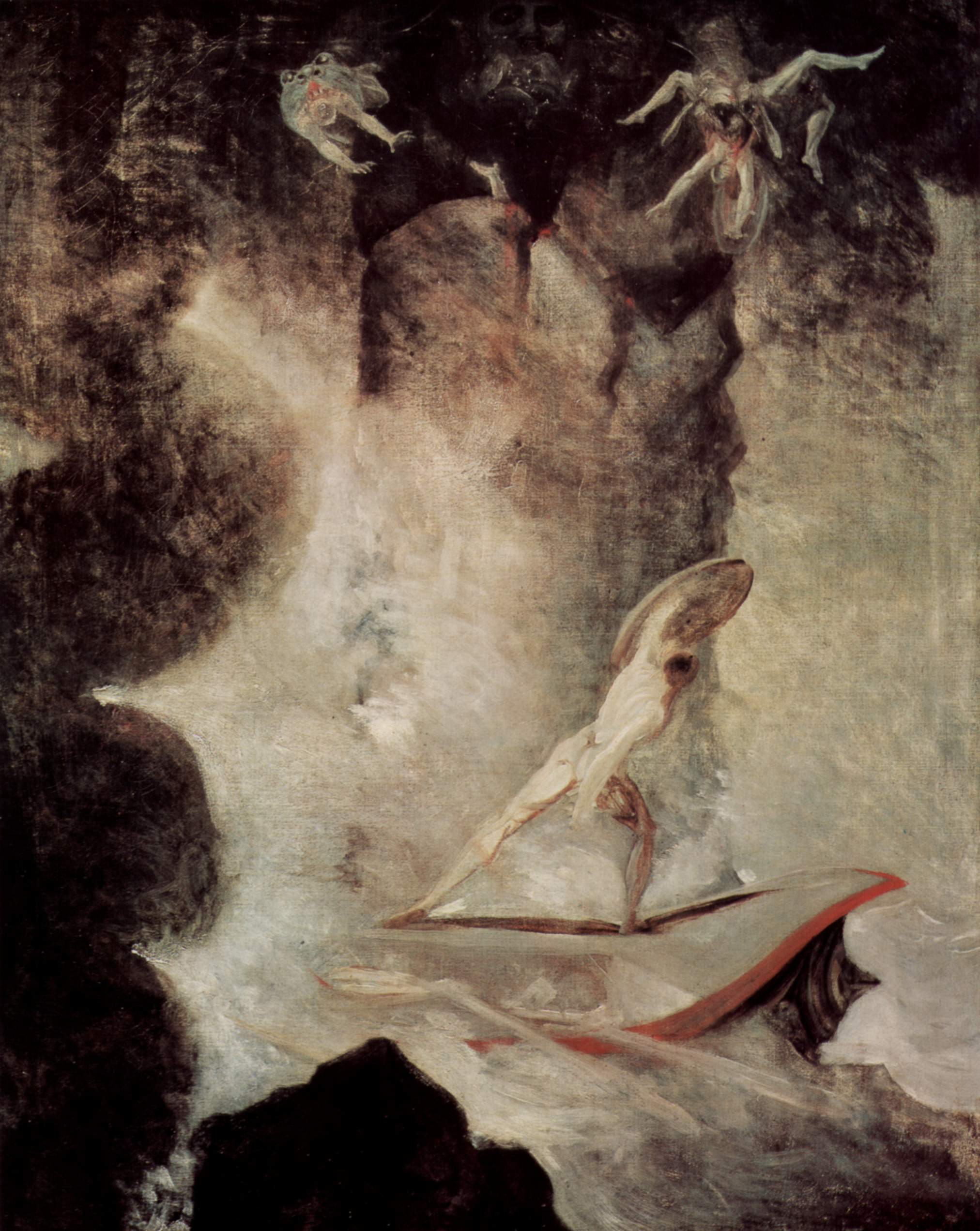
The 'mechanism' of Scylla and Charybdis is one of calculated destruction. Odysseus, advised by the sorceress Circe, had to steer his ship through a narrow channel. Scylla's monstrous form, described with six heads on long necks and rows of sharp teeth, would extend from her cave to seize unsuspecting sailors. Charybdis, on the other hand, would lie opposite, periodically drawing vast amounts of water into her maw and then expelling it with immense force, capable of destroying any vessel caught in its vortex. The choice was not about survival, but about managing inevitable loss.
📊 Key Facts & Numbers
The legend of Scylla and Charybdis has endured for over 2,800 years, a testament to its enduring power. The strait itself, often identified with the Strait of Messina between Italy and Sicily, is approximately 3.1 kilometers (1.9 miles) wide at its narrowest point. In later interpretations, the myth has been invoked in countless contexts, from military strategy to political decision-making, underscoring the universality of facing no-win scenarios. The idiom 'between Scylla and Charybdis' is estimated to have been in common usage for at least 1,500 years, appearing in various forms across European languages.
👥 Key People & Organizations
While Scylla and Charybdis are mythological figures, their narrative is inextricably linked to the heroes and deities of Greek mythology. Odysseus, the cunning protagonist of The Odyssey, is the primary human figure navigating this peril. The sorceress Circe provides the crucial, albeit grim, advice on how to survive the encounter. Other figures like Zeus and Poseidon are implicated in Charybdis's origin, shaping her destructive nature. Later scholars and poets, including Virgil in his Aeneid, have referenced and reinterpreted their story, solidifying their place in the Western literary canon. No specific organizations are directly associated with them, as they are ancient mythological entities.
🌍 Cultural Impact & Influence
The cultural footprint of Scylla and Charybdis is immense. The idiom 'between Scylla and Charybdis' is a staple in Western discourse, signifying a no-win situation. It has influenced countless literary works, artistic depictions, and philosophical discussions on decision-making under duress. The imagery of the monstrous sea creature and the destructive whirlpool has been a recurring motif in art, from ancient Greek pottery to Renaissance paintings and modern illustrations. The concept has also permeated strategic thinking; military leaders and politicians often find themselves in situations described as being 'between Scylla and Charybdis,' where any course of action carries significant risks. The phrase has also inspired the naming of various entities, from geographical features to fictional characters.
⚡ Current State & Latest Developments
In contemporary discourse, the myth of Scylla and Charybdis remains a potent metaphor for complex decision-making. While no new mythological interpretations are emerging, the idiom is frequently invoked in discussions of global politics, economic crises, and technological ethics. For instance, navigating international relations often involves balancing competing interests that can feel like choosing between two undesirable outcomes. Similarly, in the realm of AI development, balancing innovation with ethical considerations and potential risks can be seen as a modern iteration of this ancient dilemma. The ongoing relevance of the idiom suggests its deep connection to fundamental aspects of the human condition.
🤔 Controversies & Debates
The primary 'controversy' surrounding Scylla and Charybdis lies not in their existence, but in the interpretation of Odysseus's choice and the nature of fate versus free will. Some interpretations argue that his decision to sacrifice six men was a pragmatic, albeit horrific, act of leadership, demonstrating his cunning. Others view it as a tragic inevitability, highlighting the cruel indifference of the gods or fate. The debate also touches on the reliability of advice from figures like Circe; was her counsel truly helpful, or did it simply guide Odysseus toward a specific, unavoidable tragedy? The very nature of the dilemma itself is debated: is it a true choice, or an illusion of choice within a fixed outcome?
🔮 Future Outlook & Predictions
The future of the Scylla and Charybdis narrative lies in its continued metaphorical application. As humanity faces increasingly complex global challenges – from climate change and resource scarcity to geopolitical instability and the ethical implications of advanced technologies like gene editing – the idiom will undoubtedly persist. Future generations will likely continue to draw upon this ancient myth to articulate situations where difficult, often painful, choices must be made with no easy answers. The enduring power of the Scylla and Charybdis narrative suggests it will remain a relevant touchstone for understanding the human experience of navigating perilous circumstances for centuries to come.
💡 Practical Applications
The most direct 'practical application' of the Scylla and Charybdis narrative is as a pedagogical tool for teaching decision-making and risk assessment. In fields like business strategy, political science, and military strategy, the concept is used to analyze situations where all available options carry significant downsides. Leaders are trained to identify such 'no-win' scenarios, evaluate the potential consequences of each choice, and select the 'lesser evil' based on strategic objectives and acceptable losses. For example, a company might face a choice between a costly product recall that damages its reputation or facing potential lawsuits from faulty products. This is a classic Scylla and Charybdis situation, requiring careful calculation of risks and rewards.
Key Facts
- Category
- mythology
- Type
- concept