
Contents
Overview
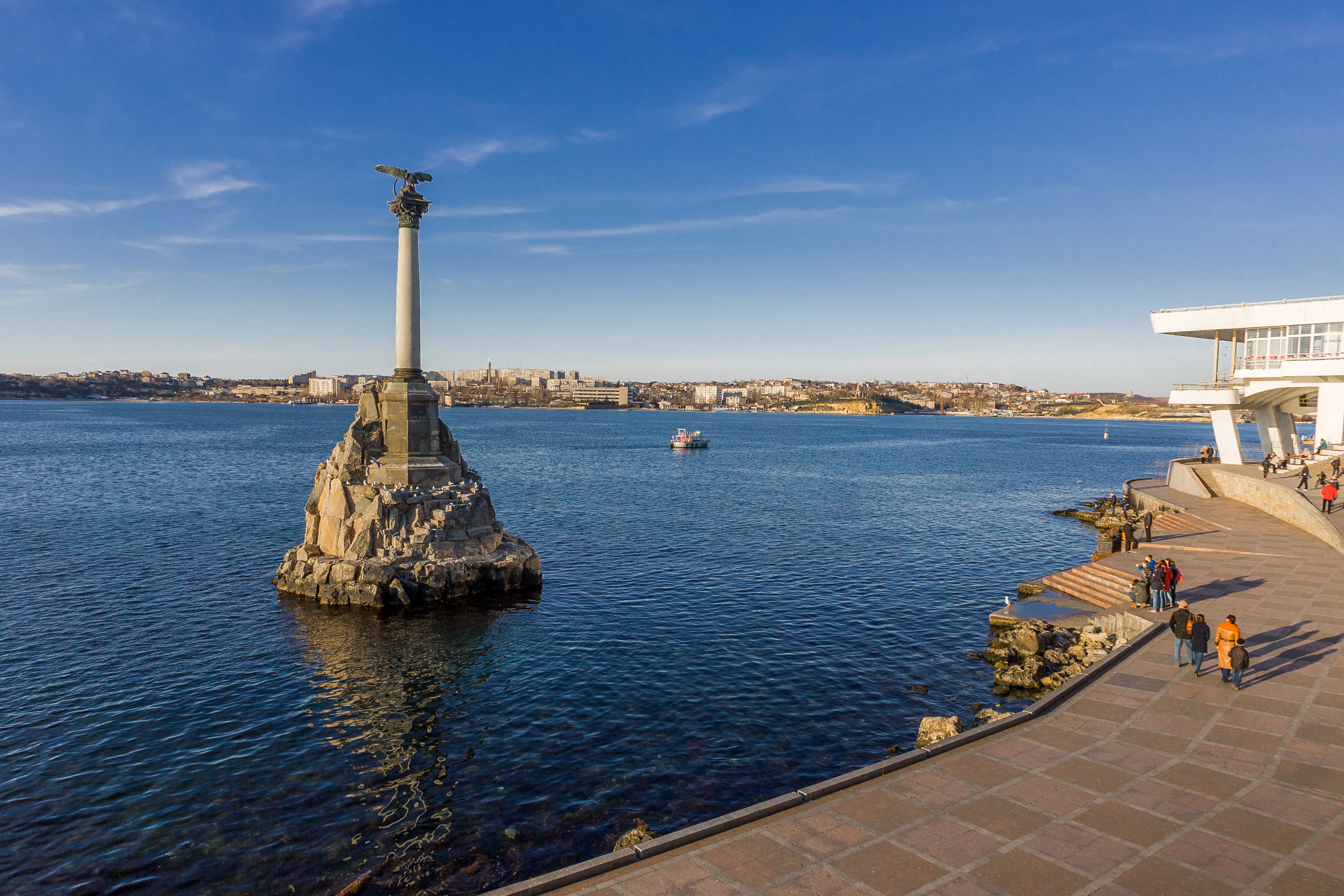
The city of Sevastopol, whose name translates to 'august city' or 'venerable city,' was founded in June 1783 by Rear Admiral Thomas MacKenzie at the behest of Empress Catherine the Great, shortly after Russia's annexation of the Crimean Khanate. Initially named Akhtiar, it was established as a naval base to assert Russian dominance in the Black Sea region and challenge Ottoman influence. Prince Grigory Potemkin later oversaw its fortification and renaming to Sevastopol in 1784. The city's deep-water harbors, protected by natural terrain, made it an ideal location for Russia's burgeoning Black Sea Fleet. Throughout the 19th century, Sevastopol became a focal point of military conflict, most notably during the Crimean War (1853-1856), where it endured a lengthy siege by Anglo-French forces. Its strategic importance was further underscored during World War II, when it again faced a brutal siege by German forces. The city's resilience and historical significance are deeply intertwined with the military history of Russia, echoing the strategic foresight of figures like Peter the Great and Catherine the Great.
⚙️ Strategic Importance
Sevastopol's strategic value lies in its unparalleled natural harbor and its position on the Black Sea, providing a warm-water port that remains ice-free year-round. This accessibility is critical for Russia, a nation largely landlocked by frozen ports for much of the year, offering a vital gateway to the Mediterranean Sea and beyond. The city's deep, protected bays can accommodate a large fleet, making it an indispensable base for naval operations. Its historical role as the home of Russia's Black Sea Fleet since 1783 has cemented its geostrategic importance. This has been evident in various conflicts, including its use as a launching point for operations in Georgia and Syria, and its central role in the ongoing conflict in Ukraine. The city's military significance is comparable to that of major naval bases like Portsmouth for the UK or Norfolk, Virginia, for the United States, as highlighted by analyses from institutions like the Center for Maritime Strategy.
🌍 Cultural & Political Significance
Beyond its military importance, Sevastopol holds deep cultural and political significance for Russia. It is considered a 'hero city' for its valiant defense during World War II, and its historical connection to the Christianization of the Slavs in the 10th century, stemming from the ancient Greek city of Chersonesus located nearby, imbues it with civilizational and even sacral importance for President Vladimir Putin. Following the dissolution of the Soviet Union, Sevastopol became a key point of contention between Ukraine and Russia. While internationally recognized as part of Ukraine, it has been under Russian occupation and de facto control since 2014, when Russia annexed Crimea. The city's population, historically with a significant Russian-speaking majority, has often expressed strong ties to Russia, leading to complex political dynamics and contributing to events like the 2014 Crimean crisis. The city's status remains a sensitive issue, reflecting broader geopolitical tensions, as discussed in analyses from sources like Wikipedia and PBS News.
🔮 Legacy & Contemporary Status
Sevastopol's enduring legacy is that of a critical geostrategic center, a testament to its historical military importance and its continued relevance in contemporary geopolitical landscapes. Its role as the primary base for Russia's Black Sea Fleet has shaped its identity and its relationship with both Ukraine and the wider international community. The city's history is marked by periods of intense conflict and reconstruction, from the Crimean War to World War II, and more recently, its status has been central to the ongoing conflict in Ukraine. The Russian government continues to invest in its development, with President Putin holding meetings on its socio-economic progress, underscoring its perceived value. The city's future remains closely tied to the geopolitical dynamics of the Black Sea region, a topic frequently covered by news outlets such as The Kyiv Independent and Izvestia.
Key Facts
- Year
- 1783-present
- Origin
- Crimea
- Category
- history
- Type
- place
Frequently Asked Questions
Why is Sevastopol called 'Sevastopol'?
The name 'Sevastopol' is derived from Greek words: 'sebastos,' meaning 'venerable' or 'august,' and 'polis,' meaning 'city.' It was chosen to signify its importance and grandeur, akin to the Roman honorific 'Augustus.'
What is the primary strategic importance of Sevastopol?
Sevastopol's primary strategic importance lies in its deep-water, ice-free harbor on the Black Sea, making it an essential warm-water port for Russia's Black Sea Fleet. This location provides crucial access to the Mediterranean Sea and facilitates naval power projection.
What is Sevastopol's historical significance?
Sevastopol has been a major naval base and fortress since its founding in 1783. It was the site of significant military actions, including the Siege of Sevastopol during the Crimean War and its defense in World War II. It is considered a 'hero city' for its wartime resilience.
What is the current political status of Sevastopol?
Internationally, Sevastopol is recognized as part of Ukraine. However, since 2014, it has been under Russian occupation and de facto control, with Russia considering it a federal city. This status is a major point of contention in the ongoing conflict between Russia and Ukraine.
Who founded Sevastopol?
Sevastopol was founded in 1783 by Rear Admiral Thomas MacKenzie at the direction of Empress Catherine the Great. It was later fortified and officially named Sevastopol by Prince Grigory Potemkin in 1784.
References
- britannica.com — /place/Sevastopol
- en.wikipedia.org — /wiki/Sevastopol
- apnews.com — /hub/sevastopol
- encyclopediaofukraine.com — /display.asp
- pbs.org — /newshour/tag/sevastopol
- en.wikivoyage.org — /wiki/Sevastopol
- ndtv.com — /topic/sevastopol
- scalar.fas.harvard.edu — /imperiia/1783-the-founding-of-sevastopol