
Contents
Overview
Soil type is a technical term in soil classification, representing a set of well-defined properties that distinguish one soil from another. Every soil belongs to a certain soil type, which can be subdivided into subtypes and combined into higher categories. Soil types are abstract terms, not found in nature, but rather a way to systematically categorize soils. The definition of soil types is based on characteristics resulting from soil-forming processes, such as pedogenesis. The FAO's World Reference Base for Soil Resources provides a framework for understanding and managing soils. The world's soil types can be broadly classified into major groups.
🌿 Origins & History
Soil type has its roots in the early 20th century, with the development of soil classification systems. This system laid the foundation for modern soil classification, which has evolved over the years to include various national and international systems, such as the FAO's World Reference Base for Soil Resources.
⚙️ How It Works
Soil classification systems work by grouping soils into categories based on their physical and chemical properties, such as texture, structure, and mineral composition. These properties are the result of soil-forming processes, such as pedogenesis, which involves the interaction of climate, topography, and organisms over time. Soil types can be subdivided into subtypes and combined into higher categories, providing a hierarchical framework for understanding and managing soils.
📊 Key Facts & Numbers
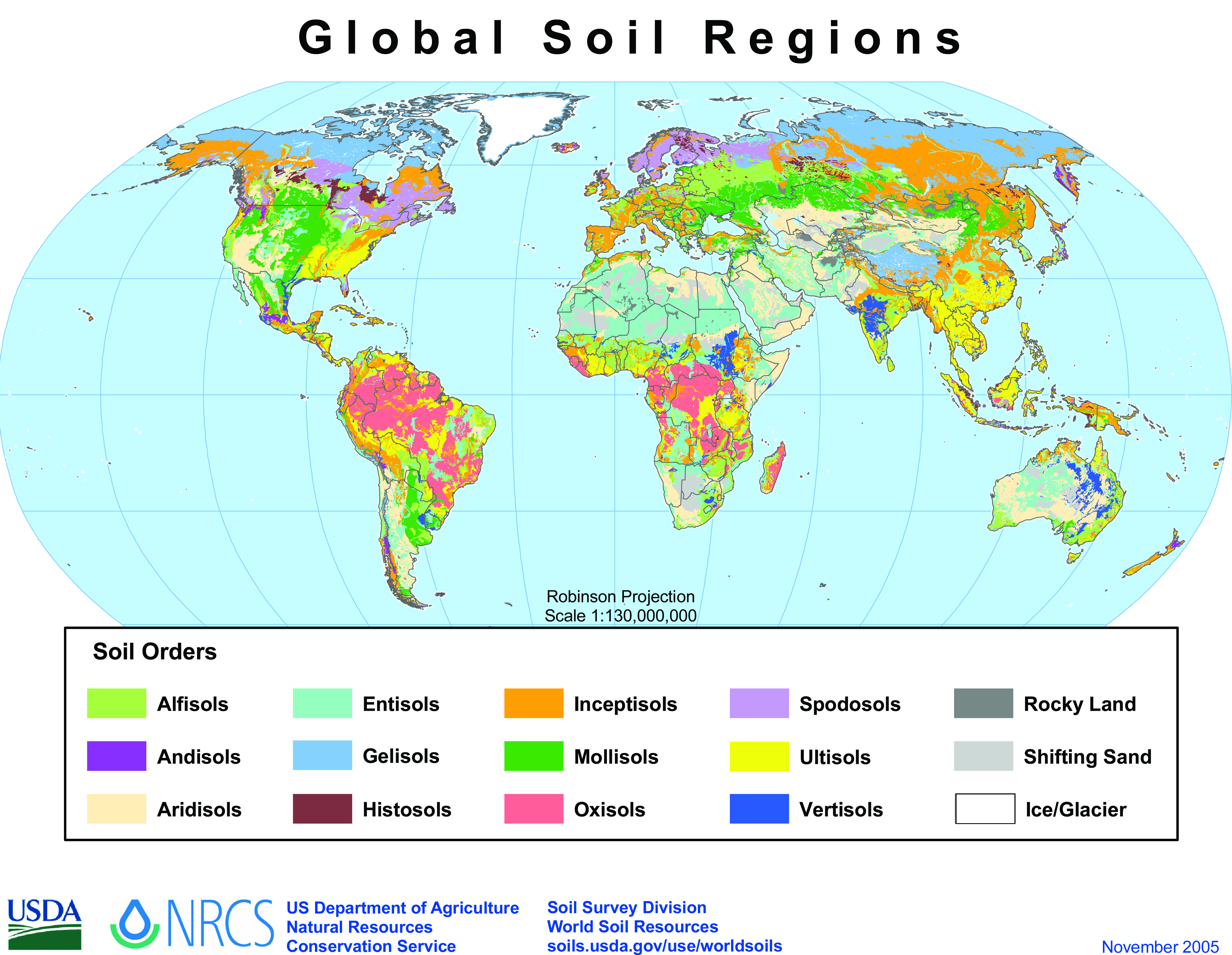
The distribution of soil types varies globally, with some regions having a higher diversity of soil types than others. According to the FAO, the world's soil types can be broadly classified into major groups.
👥 Key People & Organizations
Key people and organizations involved in soil classification include the USDA's Natural Resources Conservation Service, the FAO, and the International Union of Soil Sciences. These organizations have played a crucial role in developing and promoting soil classification systems, as well as providing training and resources for soil scientists and practitioners.
🌍 Cultural Impact & Influence
Soil types have a significant impact on culture and society, influencing land use, agriculture, and environmental sustainability. Different soil types are suited to different crops and farming practices, and understanding soil types is essential for sustainable agriculture and environmental management.
⚡ Current State & Latest Developments
The current state of soil classification is characterized by ongoing research and development of new classification systems and technologies. The use of remote sensing and GIS technologies has improved the accuracy and efficiency of soil mapping and classification.
🤔 Controversies & Debates
Controversies and debates surrounding soil classification include the need for greater standardization and harmonization of classification systems, as well as the impact of climate change on soil formation and classification.
🔮 Future Outlook & Predictions
The future outlook for soil classification is characterized by ongoing research and development of new technologies and classification systems. The use of artificial intelligence and machine learning algorithms is expected to improve the accuracy and efficiency of soil classification.
💡 Practical Applications
Practical applications of soil classification include sustainable agriculture, environmental management, and urban planning. Understanding soil types is essential for selecting the right crops and farming practices, as well as for managing soil erosion and degradation.
Key Facts
- Category
- science
- Type
- concept