
Contents
Overview
The initial concept was to create a single album, but the sheer volume of material, with each member pursuing distinct creative directions, quickly led to the decision to make it a double LP. The album's production was overseen by George Martin, though his influence was arguably less pervasive than on previous Beatles efforts, reflecting the members' desire for greater autonomy.
⚙️ How It Works
Tracks like "Back in the U.S.S.R." and "Birthday" showcase a return to more straightforward rock and roll, while "Blackbird" and "Julia" highlight acoustic folk sensibilities. George Harrison's contributions, such as "While My Guitar Gently Weeps" featuring Eric Clapton, delve into blues-infused rock, and "Revolution 9" stands as a radical avant-garde sound collage, a stark contrast to the melodic pop of "Good Night" or the whimsical "Octopus's Garden". This fragmentation, achieved through diverse instrumentation and production techniques, underscores the album's postmodern approach to the LP format.
📊 Key Facts & Numbers
Ken Townshend served as the engineer for much of the recording. Eric Clapton made an uncredited guest appearance on guitar for "While My Guitar Gently Weeps". Yoko Ono's constant presence in the studio, particularly during Lennon's sessions, became a point of contention for some band members. Allen Klein's increasing involvement in the band's business affairs also contributed to the internal discord during this period.
👥 Key People & Organizations
The primary architects of the White Album were, of course, John Lennon, Paul McCartney, George Harrison, and Ringo Starr, each contributing significantly to its diverse soundscape. George Martin, the band's long-time producer, navigated the complex recording sessions, though his role was more of a facilitator than a dictator. Ken Townshend served as the engineer for much of the recording. Eric Clapton made an uncredited guest appearance on guitar for "While My Guitar Gently Weeps". Yoko Ono's constant presence in the studio, particularly during Lennon's sessions, became a point of contention for some band members. Allen Klein's increasing involvement in the band's business affairs also contributed to the internal discord during this period.
🌍 Cultural Impact & Influence
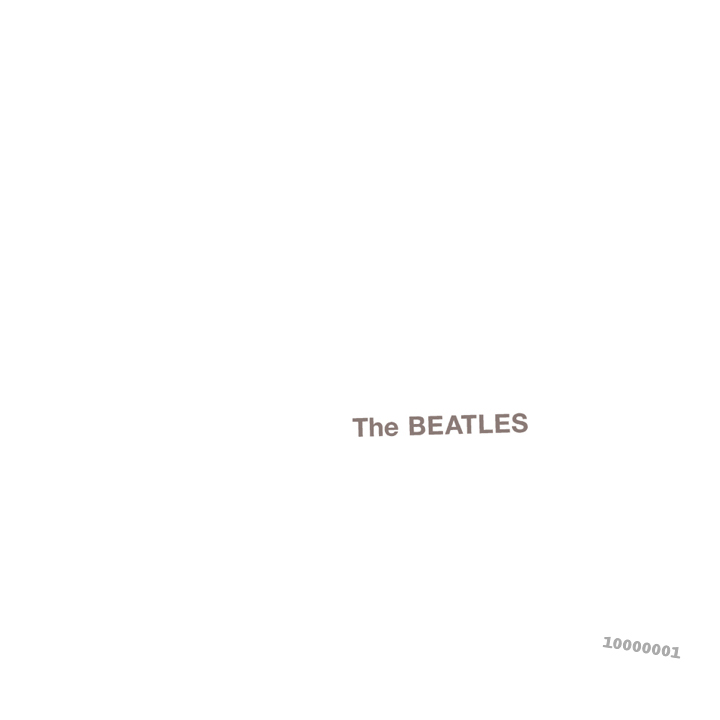
The White Album's influence on subsequent music is immeasurable, particularly its embrace of stylistic fragmentation and the double-album format. It demonstrated that a rock album could be a sprawling, diverse collection of songs rather than a tightly curated thematic statement, paving the way for artists like Pink Floyd and Led Zeppelin to explore more ambitious LPs. Its minimalist cover art became an iconic design statement, influencing countless album sleeves and establishing a precedent for conceptual simplicity in visual presentation. The album's raw, often unpolished sound and the exploration of darker, more personal lyrical themes also resonated with punk and alternative rock movements that emerged in the following decade. The sheer breadth of genres explored on the White Album encouraged musicians to break free from genre constraints, fostering greater experimentation across the music industry.
⚡ Current State & Latest Developments
As of 2024, the White Album remains a cornerstone of popular music, consistently appearing on 'greatest albums of all time' lists compiled by publications like Rolling Stone and NME. Its enduring appeal is evidenced by continued strong sales and its frequent inclusion in retrospectives and critical analyses of The Beatles' discography. Live performances of White Album tracks by contemporary artists, such as The Struts and The Avett Brothers, continue to showcase its timeless quality and adaptability.
🤔 Controversies & Debates
The primary controversy surrounding the White Album centers on its perceived lack of cohesion, with some critics and fans viewing it as a collection of solo tracks rather than a unified band effort. The increasing tensions between John Lennon and Paul McCartney, and the growing influence of Yoko Ono in the studio, are often cited as factors that contributed to the album's fragmented nature and the eventual breakup of The Beatles in 1970. The avant-garde experiment "Revolution 9" remains a particularly divisive track, with many finding it an unwelcome intrusion on an otherwise accessible album. Furthermore, the decision to release such a lengthy double album at a time when double LPs were still relatively uncommon and expensive also sparked debate about its commercial viability and artistic necessity.
🔮 Future Outlook & Predictions
The future of the White Album's legacy is intrinsically tied to the enduring appeal of The Beatles themselves. As new generations discover the band, the White Album will likely continue to be a critical entry point into their diverse catalog, offering a fascinating glimpse into their individual creative powers at a pivotal moment. The ongoing availability of high-fidelity reissues and the potential for further archival releases of outtakes and alternate takes suggest that the album's sonic landscape will continue to be explored and reinterpreted. Discussions about its place in music history are unlikely to cease, particularly concerning its role in the evolution of the double album and its impact on postmodern musical approaches. The question of whether its fragmentation was a fatal flaw or a groundbreaking artistic choice will likely persist.
💡 Practical Applications
While not a functional product in the traditional sense, the White Album's impact on the music industry is profound. Its success as a double album legitimized the format, encouraging artists to pursue more ambitious and lengthy projects. The minimalist cover art has been widely emulate
Key Facts
- Category
- culture
- Type
- topic