
Contents
- 🎵 Origins & History
- ⚙️ How It Works
- 📊 Key Facts & Numbers
- 👥 Key People & Organizations
- 🌍 Cultural Impact & Influence
- ⚡ Current State & Latest Developments
- 🤔 Controversies & Debates
- 🔮 Future Outlook & Predictions
- 💡 Practical Applications
- 📚 Related Topics & Deeper Reading
- Frequently Asked Questions
- References
- Related Topics
Overview
The human desire to predict the weather is as old as civilization itself, with early attempts rooted in observing animal behavior, celestial movements, and empirical patterns. Ancient Greeks like Aristotle (384–322 BCE) theorized about atmospheric phenomena, while cultures worldwide developed folklore and almanacs based on generations of observation. Formal meteorological forecasting began to take shape in the 19th century with the invention of the telegraph by Samuel Morse (1791–1872), enabling near-simultaneous reporting of weather conditions across regions. This was further propelled by the development of standardized instruments like the barometer and thermometer. The establishment of national weather services, such as the U.S. Weather Bureau in 1870, marked a significant institutionalization of forecasting efforts, moving beyond individual observation to coordinated data collection and analysis.
⚙️ How It Works
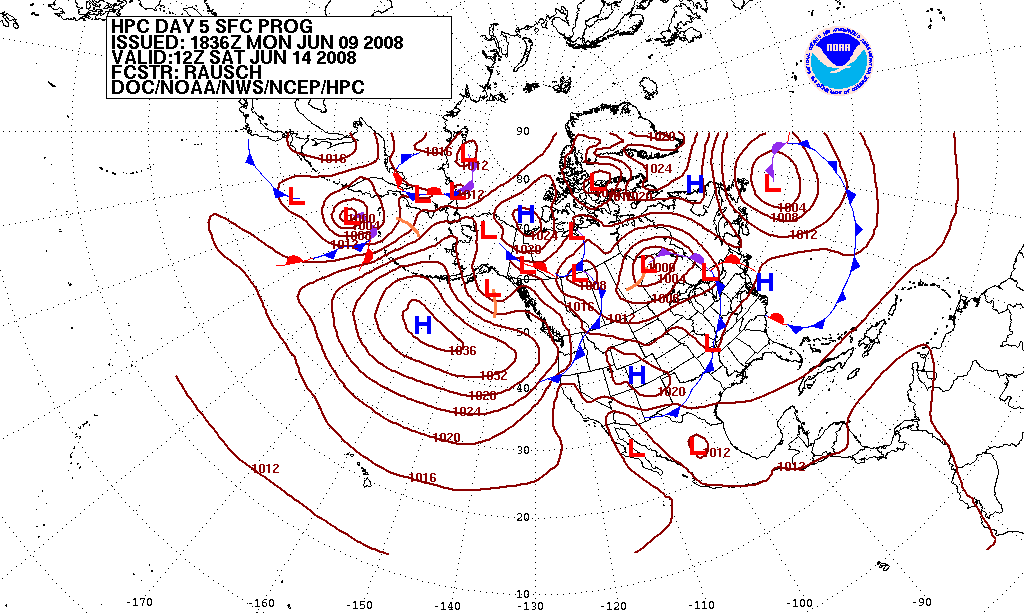
Modern weather forecasting relies heavily on Numerical Weather Prediction (NWP). This process begins with collecting vast amounts of atmospheric data from sources like geostationary satellites, Doppler radar, weather balloons, and ground-based sensors. This data is assimilated into complex mathematical models that simulate the atmosphere's behavior based on the laws of physics, including fluid dynamics and thermodynamics. These models, often running on supercomputers, divide the atmosphere into a three-dimensional grid and calculate future states of variables like temperature, pressure, and wind at each grid point. The output is then interpreted by meteorologists, who use their expertise to refine forecasts, account for model biases, and recognize teleconnections like El Niño-Southern Oscillation (ENSO) patterns.
📊 Key Facts & Numbers
The global weather forecasting market was valued at approximately $2.5 billion in 2023 and is projected to reach over $4 billion by 2030, demonstrating significant economic importance. Forecasts are typically issued for periods ranging from a few hours (nowcasting) to 10 days, with accuracy decreasing sharply beyond 7 days. For instance, 1-day forecasts achieve around 90% accuracy for temperature, while 5-day forecasts hover around 70-80% accuracy. Satellites alone provide over 15 terabytes of data daily, crucial for global coverage. The ECMWF's Integrated Forecasting System (IFS) model, for example, runs on a grid resolution of approximately 9 kilometers, with higher-resolution versions for specific applications. The cost of operating these sophisticated modeling systems can run into hundreds of millions of dollars annually for major meteorological agencies.
👥 Key People & Organizations
Pioneers like Vilhelm Bjerknes (1862–1951) laid the theoretical groundwork for NWP by formulating equations describing atmospheric motion. John von Neumann (1903–1957) was instrumental in developing the first computer-based weather prediction models in the late 1940s and early 1950s, utilizing early electronic computers like the ENIAC. Key organizations driving progress include the NOAA in the U.S., the Met Office in the UK, and the European Centre for Medium-Range Weather Forecasts. More recently, figures like Yu Shao and Shun Zhang have contributed to advancements in deep learning for weather prediction at institutions like Tsinghua University.
🌍 Cultural Impact & Influence
Weather forecasting technology has profoundly shaped human society, influencing everything from agricultural practices to urban planning and disaster preparedness. The ability to predict severe weather events like hurricanes, tornadoes, and floods has saved countless lives and billions of dollars in damages, as evidenced by the improved warning systems for Hurricane Katrina (2005) compared to earlier storms. Aviation relies entirely on accurate forecasts for flight planning and safety, with airlines like Delta Air Lines investing heavily in meteorological support. The entertainment industry also reflects its impact, with weather often playing a dramatic role in films and literature, from the blizzard in The Day After Tomorrow to the pervasive influence of weather apps on daily routines.
⚡ Current State & Latest Developments
The current frontier in weather forecasting technology is dominated by the integration of Artificial Intelligence and Machine Learning. Companies like Google AI and Microsoft Azure are developing AI models that can generate forecasts faster and sometimes with comparable or superior accuracy to traditional NWP for short-term predictions. For example, Google's GraphCast model can produce 10-day forecasts in under a minute, a significant speed improvement. There's also a push for higher-resolution models, down to kilometer-scale, to better predict localized phenomena like thunderstorms and urban heat islands. The development of new weather satellite constellations, such as JAXA's GCOM-C and NOAA's JPSS-2, continues to enhance data acquisition capabilities.
🤔 Controversies & Debates
A significant controversy surrounds the inherent predictability limits of the atmosphere, often referred to as the butterfly effect, first popularized by Edward Lorenz. While NWP models have become incredibly sophisticated, the chaotic nature of atmospheric systems means perfect long-term forecasts remain an elusive goal, leading to debates about the true ceiling of forecast accuracy. Another point of contention is the accessibility and cost of high-resolution models and advanced data, creating a potential 'forecasting divide' between well-funded national agencies and smaller entities or developing nations. Furthermore, the increasing reliance on AI models raises questions about transparency, interpretability, and the potential for unforeseen biases or errors compared to physics-based NWP.
🔮 Future Outlook & Predictions
The future of weather forecasting technology is poised for further integration of AI and machine learning, potentially leading to hyper-localized and personalized forecasts delivered with unprecedented speed. Researchers are exploring 'digital twins' of the Earth, creating highly detailed, real-time simulations that could revolutionize climate and weather modeling. Advancements in quantum computing, though still nascent, hold the promise of dramatically accelerating complex atmospheric simulations. Expect to see a continued push towards ensemble forecasting, where multiple model runs are used to provide a range of possible outcomes and associated probabilities, offering a more robust understanding of forecast uncertainty. The goal is not just to predict what the weather will be, but to provide actionable insights into its potential impacts.
💡 Practical Applications
Weather forecasting technology has myriad practical applications across diverse sectors. In agriculture, it informs planting, irrigation, and harvesting decisions, helping to maximize yields and minimize losses from adverse weather. The aviation industry uses forecasts for flight planning, routing, and safety, particularly concerning turbulence and icing conditions. Energy companies rely on predictions for managing power grids, anticipating demand for heating and cooling, and optimizing renewable energy sources like wind and solar. Emergency management agencies use forecasts to prepare for and respond to natural disasters, issuing timely warnings for hurricanes, floods, and severe storms. Even retail and logistics companies use weather data to manage inventory and optimize delivery routes.
Key Facts
- Year
- 19th Century (formalized)
- Origin
- Global
- Category
- technology
- Type
- technology
Frequently Asked Questions
How accurate are modern weather forecasts?
Modern weather forecasts have achieved remarkable accuracy, especially for short-term predictions. A 1-day forecast for temperature, for instance, is typically around 90% accurate. However, accuracy diminishes significantly beyond 7 days due to the atmosphere's chaotic nature. For example, a 5-day forecast might have an accuracy of 70-80%, while a 10-day forecast is considerably less reliable, often falling below 50% for precise temperature predictions. Organizations like the ECMWF continuously refine their models to improve these metrics.
What is Numerical Weather Prediction (NWP)?
Numerical Weather Prediction (NWP) is the core methodology behind modern weather forecasting. It involves using complex mathematical models that represent the physical laws governing the atmosphere—such as fluid dynamics and thermodynamics—to simulate future atmospheric conditions. These models divide the atmosphere into a grid and calculate changes in variables like temperature, pressure, and wind over time. The process requires massive datasets from sources like weather satellites and Doppler radar, processed on powerful supercomputers.
How has AI changed weather forecasting?
Artificial Intelligence (AI) and Machine Learning (ML) are rapidly transforming weather forecasting, particularly for short-term predictions. AI models like Google AI's GraphCast can generate forecasts in minutes, significantly faster than traditional NWP models, and have shown comparable or even superior accuracy for certain timeframes. These data-driven approaches complement physics-based models by identifying complex patterns and relationships in historical weather data that might be missed by traditional simulations. This integration promises more efficient and potentially more accurate forecasting, especially for rapidly developing phenomena.
Why can't we predict the weather perfectly?
Perfect long-term weather prediction is impossible due to the atmosphere's inherent chaotic nature, famously described by Edward Lorenz's 'butterfly effect.' Tiny, immeasurable variations in initial conditions can lead to vastly different outcomes over time. While NWP models are sophisticated, they rely on approximations and incomplete observational data, meaning small errors are amplified. This fundamental unpredictability means that even with the most advanced technology, forecasts become less reliable the further into the future they extend.
What are the most important data sources for weather forecasting?
Modern weather forecasting relies on a diverse array of data sources to build a comprehensive picture of the atmosphere. Key among these are weather satellites (both geostationary and polar-orbiting) providing global coverage of cloud patterns, temperature, and moisture. Doppler radar networks are crucial for tracking precipitation and wind within storms. Additionally, weather balloons (radiosondes) provide vertical profiles of atmospheric conditions, while ground-based weather stations offer surface-level data on temperature, pressure, humidity, and wind. Buoys in the ocean also contribute vital sea surface temperature and atmospheric pressure data.
How do meteorologists use weather models?
Meteorologists act as crucial interpreters of the raw output from NWP models. They don't just blindly accept a model's prediction; instead, they analyze data from multiple models (ensemble forecasting) to assess the range of possible outcomes and their probabilities. Meteorologists use their expertise in pattern recognition, understanding of model biases (e.g., a model that consistently overestimates rainfall in a certain region), and knowledge of teleconnections (like ENSO effects) to refine forecasts. They then translate this complex data into understandable forecasts for the public and specific industries, often adding local knowledge that models might miss.
What is the future of weather forecasting technology?
The future points towards even greater integration of AI and machine learning, potentially creating 'digital twins' of the Earth for highly detailed simulations. We can expect hyper-localized forecasts, possibly down to the street level, and faster prediction times. Advancements in quantum computing might eventually accelerate complex atmospheric calculations. The focus will likely remain on improving ensemble forecasting to better quantify uncertainty and providing more actionable insights into the potential impacts of weather events, moving beyond simple predictions to risk assessment.