
Contents
Overview
Jazz, a genre that burst forth from the crucible of American culture at the turn of the 20th century, is more than just music; it's a philosophy, a conversation, and a living testament to improvisation and innovation. Emerging from African American communities in New Orleans, it synthesized elements of blues, ragtime, spirituals, and West African musical sensibilities with European harmonic structures and instrumentation. This potent blend created a soundscape characterized by syncopation, swing, polyrhythms, and the central pillar of improvisation, allowing individual musicians to express themselves spontaneously within a given harmonic and rhythmic framework.
From its early days as a vibrant, often raucous, music of social gatherings and dance halls, jazz rapidly evolved, splintering into numerous subgenres that reflected the changing social and artistic currents of America and the world. The 'hot jazz' of the 1920s gave way to the sophisticated arrangements of the Swing Era in the 1930s and 40s. The post-war era saw the intellectual intensity of Bebop, a reaction against the commercialism of swing, which emphasized complex harmonies and virtuosic improvisation. This, in turn, paved the way for the cooler tones of Cool Jazz, the modal explorations of Miles Davis in Modal Jazz, the fiery intensity of Hard Bop, and the avant-garde experiments of Free Jazz.
Jazz's influence is immeasurable, permeating nearly every corner of popular and classical music. Its harmonic language, rhythmic complexity, and improvisational spirit have been absorbed and reinterpreted by countless artists across genres, from Rock and Hip Hop to Electronic Music and contemporary classical compositions. While its mainstream popularity has waxed and waned, jazz remains a vital and dynamic art form, continuously reinventing itself through new generations of musicians who draw on its rich history while pushing its boundaries into uncharted territories. Its enduring legacy lies in its capacity for personal expression, its democratic spirit of collective improvisation, and its profound reflection of the human experience.
Origins and Early Development
The genesis of jazz is inextricably linked to the African American experience in the late 19th and early 20th centuries, particularly in New Orleans. This port city was a cultural melting pot where African rhythms, call-and-response patterns, and blues tonalities mingled with European classical music, military band traditions, and Caribbean influences. Early pioneers like Buddy Bolden, though never recorded, are credited with laying the groundwork for the ensemble improvisations that defined early jazz. The blues, with its characteristic 12-bar structure and expressive vocalizations, provided a crucial harmonic and melodic vocabulary, while ragtime offered syncopated rhythms that would become a hallmark of the genre. The development of the recording industry in the 1920s was pivotal, allowing the music of artists like Louis Armstrong and Duke Ellington to reach a national and international audience, solidifying jazz's status as a distinct musical entity.
Evolution of Styles
The evolution of jazz is marked by a series of stylistic revolutions, each building upon and reacting to its predecessors. The Swing Era (mid-1930s to mid-1940s) saw jazz become America's dominant popular music, characterized by large ensembles, arranged sections, and a danceable rhythm. Visionaries like Count Basie and Benny Goodman led some of the most popular bands. The subsequent emergence of Bebop in the 1940s, spearheaded by figures like Charlie Parker and Dizzy Gillespie, represented a radical shift towards smaller groups, faster tempos, complex harmonies, and virtuosic improvisation, marking jazz's transition from popular entertainment to a more challenging art music. This era also saw the beginnings of jazz's global spread, with musicians incorporating international influences and audiences developing worldwide.
Global Reach and Artistic Influence
Jazz's legacy extends far beyond its own sonic boundaries. Its harmonic innovations have found their way into film scores, popular songs, and classical compositions. The improvisational ethos has inspired artists in diverse fields, from writers and painters to entrepreneurs. The concept of 'swing' – that ineffable rhythmic feel – has become a touchstone for groove and feel in many genres. Furthermore, jazz has consistently served as a vehicle for social commentary and cultural expression, reflecting and sometimes challenging the societal norms of its time. From the integrationist spirit of Dizzy Gillespie's United Nations Orchestra to the Black nationalist statements of Art Blakey and the Jazz Messengers, the music has often been at the forefront of cultural dialogues. Today, jazz continues to be a global phenomenon, with vibrant scenes in Europe, Asia, and South America, each contributing unique perspectives to its ongoing narrative.
Cultural Significance and Enduring Debates
The cultural impact of jazz is profound and multifaceted. It was among the first distinctly American art forms to gain international recognition, breaking down racial barriers within the music industry and beyond, though not without significant struggle and ongoing racial tensions within its history. The improvisational nature of jazz reflects democratic ideals, emphasizing individual expression within a collaborative framework. Its aesthetic principles—spontaneity, innovation, and sophisticated harmonic and rhythmic interplay—have influenced not only music but also dance, literature, and visual arts. The constant reinvention within jazz mirrors the dynamism of modern society, making it a perpetual source of inspiration and a benchmark for artistic integrity. The ongoing debate about what constitutes 'true' jazz continues, reflecting its rich and contested history.
Key Facts
- Year
- c. 1900-present
- Origin
- New Orleans, Louisiana, USA
- Category
- music
- Type
- genre
Frequently Asked Questions
What is the origin of jazz?
Jazz originated in the southern United States, particularly in New Orleans, in the late 19th and early 20th centuries
Who are some influential jazz musicians?
Louis Armstrong, Duke Ellington, Charlie Parker, and Miles Davis are just a few examples of influential jazz musicians
What are some common jazz instruments?
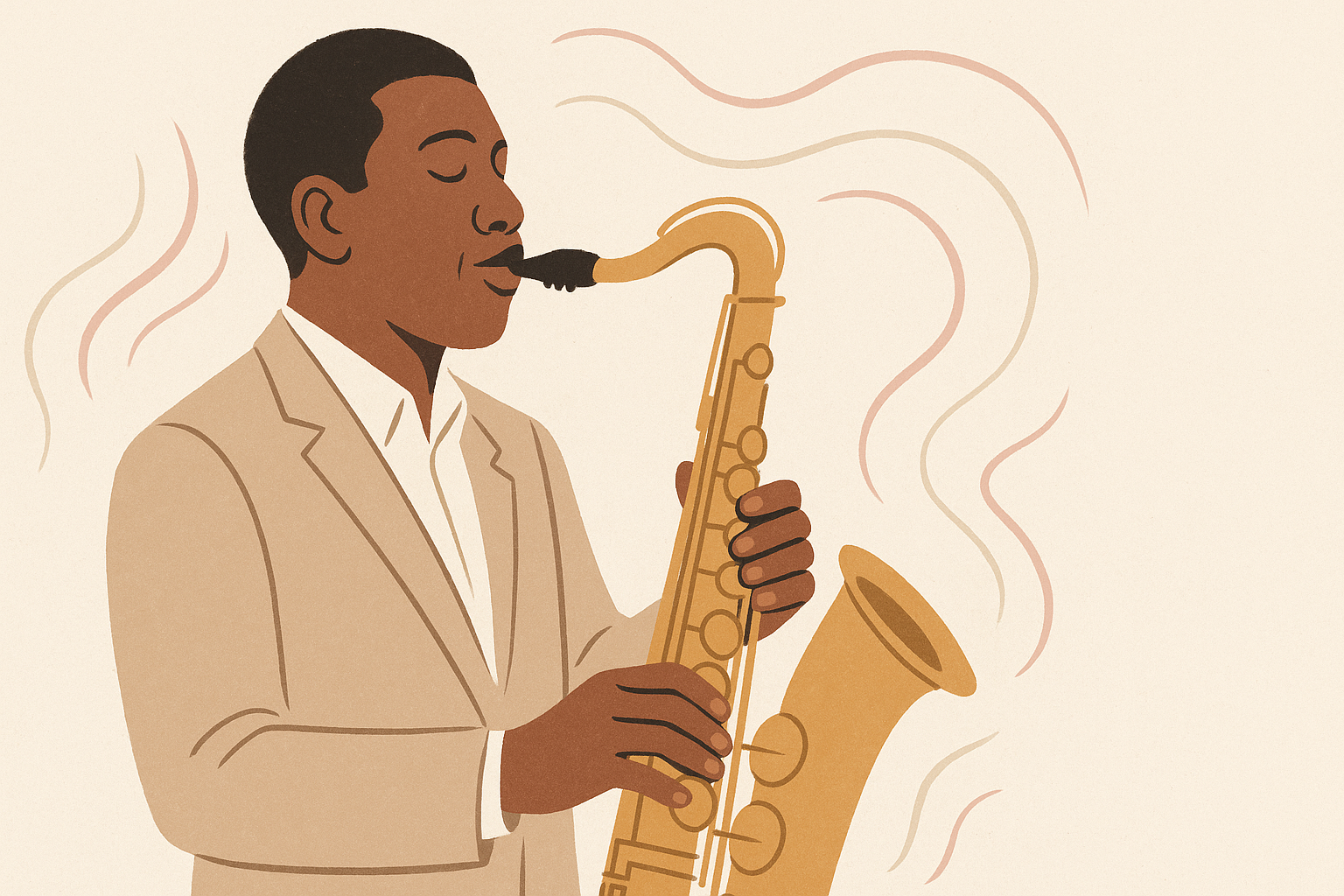
Saxophone, trumpet, piano, guitar, and drums are all common instruments in jazz music