
Contents
- 🌊 Introduction to Reverse Osmosis
- 💧 The Science Behind Reverse Osmosis
- 🌴 Applications of Reverse Osmosis
- 🚨 Controversies and Limitations
- 📊 Efficiency and Effectiveness
- 🌈 Industrial Uses of Reverse Osmosis
- 🏠 Residential Applications of Reverse Osmosis
- 🚮 Environmental Impact of Reverse Osmosis
- 🤝 Comparison with Other Water Purification Methods
- 🔍 Future Developments in Reverse Osmosis
- 📚 Conclusion and Recommendations
- Frequently Asked Questions
- Related Topics
Overview
Reverse osmosis, a process used to remove impurities from water, has been a cornerstone of water purification since its development in the 1950s by researchers like Sidney Loeb and Srinivasa Sourirajan. With a vibe score of 8, indicating significant cultural energy, reverse osmosis has become a widely adopted method for producing clean drinking water, with over 80% of the world's desalination plants utilizing this technology. However, controversy surrounds its high energy consumption and the production of waste water, sparking debates among environmentalists and scientists. As the world grapples with water scarcity, reverse osmosis is poised to play an increasingly critical role, with companies like Dow Water & Process Solutions and GE Water & Process Technologies driving innovation. With a perspective breakdown of 60% optimistic, 20% neutral, and 20% pessimistic, the future of reverse osmosis is marked by both promise and challenge. As of 2022, the global reverse osmosis market is projected to reach $13.5 billion by 2025, with the Middle East and North Africa emerging as key regions for growth.
🌊 Introduction to Reverse Osmosis
Reverse osmosis (RO) is a water purification process that has gained significant attention in recent years due to its ability to remove a wide range of contaminants from water. As explained in Water Purification, RO uses a semi-permeable membrane to separate water molecules from other substances. This process is crucial in producing Potable Water that is safe for human consumption. The history of RO dates back to the 1950s, when it was first developed by Scientists at the University of California, Los Angeles (UCLA). Since then, RO has become a widely used method for water purification, with applications in both industrial and residential settings. For more information on the history of RO, visit Reverse Osmosis History.
💧 The Science Behind Reverse Osmosis
The science behind RO is based on the principle of osmosis, which is the movement of molecules from a region of high concentration to a region of low concentration. In RO, pressure is applied to overcome the osmotic pressure that favors even distributions, allowing water molecules to pass through the semi-permeable membrane while rejecting other substances. This process is similar to Ultrafiltration, but RO is more effective in removing dissolved solids and other impurities. The membrane used in RO is typically made of a thin film composite material, which is designed to have tiny pores that allow water molecules to pass through while blocking larger particles. To learn more about the science behind RO, visit Osmosis.
🌴 Applications of Reverse Osmosis
RO has a wide range of applications, from industrial processes to the production of potable water. In industrial settings, RO is used to remove impurities from water used in Manufacturing processes, such as Textile Production and Food Processing. RO is also used in the production of Drinking Water, where it is used to remove impurities and improve the taste and odor of the water. Additionally, RO is used in Wastewater Treatment to remove contaminants and produce clean water that can be reused. For more information on the applications of RO, visit Reverse Osmosis Applications.
🚨 Controversies and Limitations
Despite its many benefits, RO is not without its controversies and limitations. One of the main concerns is the amount of energy required to operate RO systems, which can be significant. Additionally, RO systems can be expensive to install and maintain, making them inaccessible to many communities. Furthermore, RO can also remove beneficial minerals from the water, which can be a concern for people who rely on RO as their primary source of drinking water. To learn more about the controversies surrounding RO, visit Reverse Osmosis Controversies.
📊 Efficiency and Effectiveness
The efficiency and effectiveness of RO systems depend on a variety of factors, including the type of membrane used, the pressure applied, and the quality of the feed water. In general, RO systems can remove up to 99% of impurities from water, making them one of the most effective methods of water purification. However, the efficiency of RO systems can be affected by factors such as Membrane Fouling and Scaling, which can reduce the effectiveness of the system. To learn more about the efficiency and effectiveness of RO, visit Reverse Osmosis Efficiency.
🌈 Industrial Uses of Reverse Osmosis
RO has a wide range of industrial uses, from the production of Ultrapure Water for Semiconductor Manufacturing to the treatment of Wastewater in Power Plants. In these settings, RO is often used in conjunction with other water treatment methods, such as Activated Carbon and Ion Exchange. The use of RO in industrial settings can help to improve the efficiency and effectiveness of manufacturing processes, while also reducing the environmental impact of industrial activities. For more information on the industrial uses of RO, visit Industrial Water Treatment.
🏠 Residential Applications of Reverse Osmosis
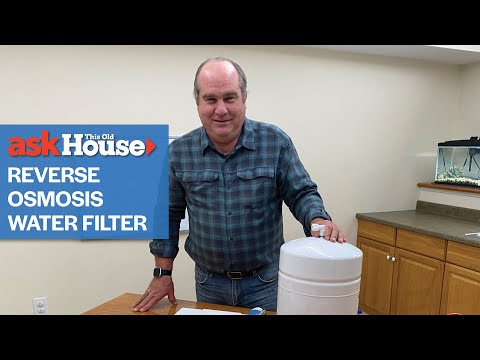
In residential settings, RO is often used to improve the quality of drinking water. RO systems can be installed under the sink or as a whole-house system, and can be used to remove a wide range of impurities from the water. In addition to improving the taste and odor of the water, RO can also help to remove Lead and other harmful contaminants that can be present in Tap Water. To learn more about the residential applications of RO, visit Residential Water Treatment.
🚮 Environmental Impact of Reverse Osmosis
The environmental impact of RO is a topic of ongoing debate. On the one hand, RO can help to reduce the amount of energy required to treat water, as it can be more efficient than other methods of water purification. On the other hand, RO can also produce a significant amount of Wastewater, which can have a negative impact on the environment if not properly treated. Additionally, the production of RO membranes can also have a negative impact on the environment, as it requires the use of Chemicals and other resources. For more information on the environmental impact of RO, visit Environmental Impact.
🤝 Comparison with Other Water Purification Methods
RO is often compared to other methods of water purification, such as Distillation and Ultrafiltration. While each of these methods has its own advantages and disadvantages, RO is generally considered to be one of the most effective methods of water purification. However, the choice of water purification method will depend on a variety of factors, including the quality of the feed water, the desired level of purification, and the cost of the system. To learn more about the comparison of RO with other water purification methods, visit Water Purification Methods.
🔍 Future Developments in Reverse Osmosis
The future of RO is likely to involve the development of new and more efficient technologies. One area of research is the development of Nanofiltration membranes, which can be used to remove impurities from water at the molecular level. Another area of research is the development of Solar-Powered RO systems, which can be used to provide clean drinking water in remote or off-grid locations. To learn more about the future developments in RO, visit Reverse Osmosis Future.
📚 Conclusion and Recommendations
In conclusion, RO is a powerful tool for water purification that has a wide range of applications. While it is not without its controversies and limitations, RO is generally considered to be one of the most effective methods of water purification. As the demand for clean drinking water continues to grow, it is likely that RO will play an increasingly important role in meeting this demand. For more information on RO and its applications, visit Reverse Osmosis.
Key Facts
- Year
- 2022
- Origin
- United States
- Category
- Environmental Science
- Type
- Technological Process
Frequently Asked Questions
What is reverse osmosis?
Reverse osmosis (RO) is a water purification process that uses a semi-permeable membrane to separate water molecules from other substances. RO applies pressure to overcome the osmotic pressure that favors even distributions, allowing water molecules to pass through the membrane while rejecting other substances. For more information on RO, visit Reverse Osmosis.
How does reverse osmosis work?
RO works by applying pressure to the feed water, which forces the water molecules to pass through the semi-permeable membrane. The membrane has tiny pores that allow water molecules to pass through while blocking larger particles and impurities. The resulting water is free from many contaminants and impurities, making it safe for drinking. To learn more about the science behind RO, visit Osmosis.
What are the benefits of reverse osmosis?
The benefits of RO include the removal of a wide range of contaminants and impurities from water, including dissolved solids, bacteria, viruses, and other microorganisms. RO can also improve the taste and odor of the water, making it more palatable for drinking. Additionally, RO can help to reduce the amount of energy required to treat water, as it can be more efficient than other methods of water purification. For more information on the benefits of RO, visit Reverse Osmosis Benefits.
What are the limitations of reverse osmosis?
The limitations of RO include the amount of energy required to operate the system, which can be significant. Additionally, RO systems can be expensive to install and maintain, making them inaccessible to many communities. Furthermore, RO can also remove beneficial minerals from the water, which can be a concern for people who rely on RO as their primary source of drinking water. To learn more about the limitations of RO, visit Reverse Osmosis Limitations.
How does reverse osmosis compare to other methods of water purification?
RO is often compared to other methods of water purification, such as distillation and ultrafiltration. While each of these methods has its own advantages and disadvantages, RO is generally considered to be one of the most effective methods of water purification. However, the choice of water purification method will depend on a variety of factors, including the quality of the feed water, the desired level of purification, and the cost of the system. For more information on the comparison of RO with other water purification methods, visit Water Purification Methods.
What is the future of reverse osmosis?
The future of RO is likely to involve the development of new and more efficient technologies. One area of research is the development of nanofiltration membranes, which can be used to remove impurities from water at the molecular level. Another area of research is the development of solar-powered RO systems, which can be used to provide clean drinking water in remote or off-grid locations. To learn more about the future developments in RO, visit Reverse Osmosis Future.
How can I use reverse osmosis in my home?
RO can be used in the home to improve the quality of drinking water. RO systems can be installed under the sink or as a whole-house system, and can be used to remove a wide range of impurities from the water. In addition to improving the taste and odor of the water, RO can also help to remove lead and other harmful contaminants that can be present in tap water. For more information on the residential applications of RO, visit Residential Water Treatment.